
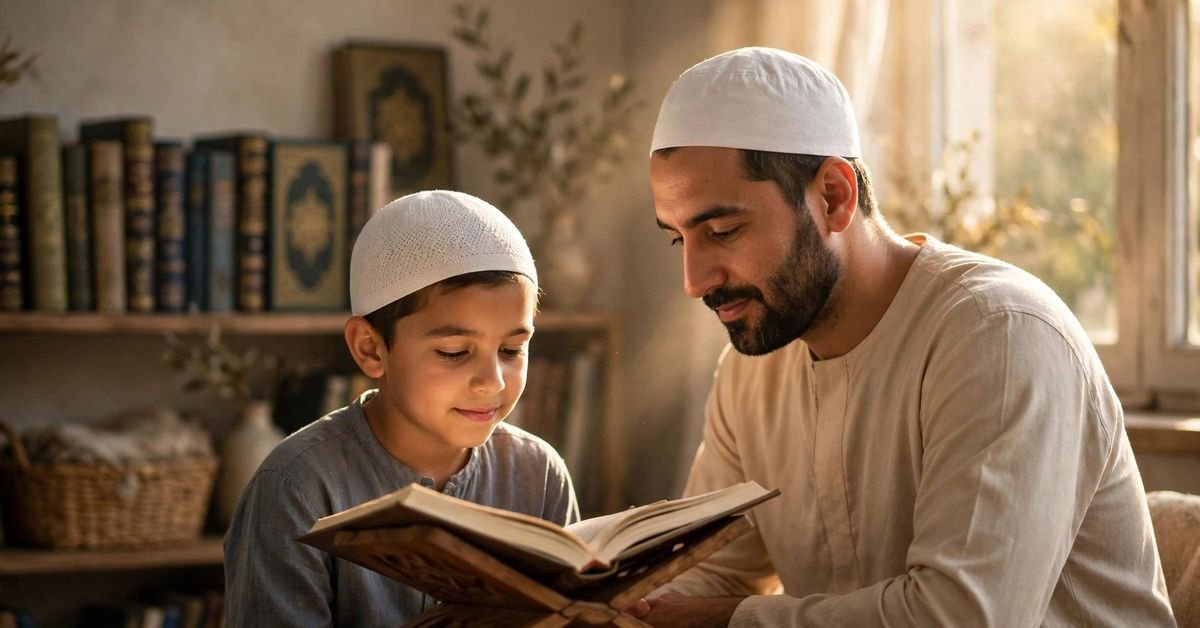
Every parent dreams of the day their child recites the Quran from memory. Children are the best memorisers Allah created — and with a simple daily routine, patient encouragement and the right teacher, your child can build a hifz habit that lasts a lifetime. Here are ten practical tips to help your child memorise the Quran, step by step.
Allah Made the Quran Easy to Memorise
Before any method or timetable, start with this promise from Allah:
وَلَقَدْ يَسَّرْنَا الْقُرْآنَ لِلذِّكْرِ فَهَلْ مِن مُّدَّكِرٍ
“Wa laqad yassarnal-Qur’ana lidh-dhikri fa-hal min muddakir.”
“And We have certainly made the Quran easy for remembrance, so is there any who will remember?” (Surah Al-Qamar 54:17)
The Quran is the only book in the world memorised cover to cover by millions of children. Your child’s memory is not the obstacle — consistency is. The Prophet ﷺ also told us where the highest honour lies:
خَيْرُكُمْ مَنْ تَعَلَّمَ الْقُرْآنَ وَعَلَّمَهُ
“Khayrukum man ta’allamal-Qur’ana wa ‘allamah.”
“The best of you are those who learn the Quran and teach it.” (Sahih al-Bukhari 5027)
When you help your child memorise the Quran, you are part of that “best of you” — as a parent, a teacher and a companion on the journey.
The Reward Waiting for Parents
There is a reward in this journey that belongs especially to you. The Prophet ﷺ said:
مَنْ قَرَأَ الْقُرْآنَ وَعَمِلَ بِمَا فِيهِ أُلْبِسَ وَالِدَاهُ تَاجًا يَوْمَ الْقِيَامَةِ ضَوْؤُهُ أَحْسَنُ مِنْ ضَوْءِ الشَّمْسِ فِي بُيُوتِ الدُّنْيَا لَوْ كَانَتْ فِيكُمْ فَمَا ظَنُّكُمْ بِالَّذِي عَمِلَ بِهَذَا
“Man qara’al-Qur’ana wa ‘amila bima fihi ulbisa walidahu tajan yawmal-qiyamati daw’uhu ahsanu min daw’ish-shamsi fi buyutid-dunya law kanat fikum, fa ma zannukum billadhi ‘amila bihaza.”
“Whoever recites the Quran and acts according to what is in it, his parents will be given a crown to wear on the Day of Resurrection whose light is better than the light of the sun in the dwellings of this world, if it were among you. So what do you think of the one who acts upon this?” (Sunan Abi Dawud 1453; graded Hasan by Ibn Hajar and others)
And the Quran itself will speak for your child on the Day of Resurrection:
اقْرَءُوا الْقُرْآنَ فَإِنَّهُ يَأْتِي يَوْمَ الْقِيَامَةِ شَفِيعًا لِأَصْحَابِهِ
“Iqra’ul-Qur’ana fa-innahu ya’ti yawmal-qiyamati shafi’an li-ashabihi.”
“Read the Quran, for it will come as an intercessor for its companions on the Day of Resurrection.” (Sahih Muslim 804)
Keep these rewards in front of you on the hard days — when your child is tired, when a verse will not stick, when progress feels slow. You are not just teaching verses; you are building an intercessor for your child and a crown for yourself.
10 Practical Tips to Help Your Child Memorise the Quran
1. Start small — a few verses a day
Three to five short verses a day is enough for a young child. Small daily wins beat big weekly pushes: a child who memorises three verses a day, five days a week, finishes a juz in about a year — without ever feeling crushed by the task.
2. Fix the same time every day
After Fajr is the golden time: the mind is fresh and the house is quiet. If mornings do not work, pick any fixed slot — after Asr, or before bed — and guard it. A fixed time turns memorisation from a chore into a habit.
3. Listen first, then repeat
Play the new verses from a clear, slow reciter and let your child listen two or three times before reading. Hearing the correct pronunciation first prevents mistakes from settling in. And if your child stumbles, remember the Prophet’s ﷺ promise:
الْمَاهِرُ بِالْقُرْآنِ مَعَ السَّفَرَةِ الْكِرَامِ الْبَرَرَةِ، وَالَّذِي يَقْرَأُ الْقُرْآنَ وَيَتَتَعْتَعُ فِيهِ وَهُوَ عَلَيْهِ شَاقٌّ لَهُ أَجْرَانِ
“Al-mahiru bil-Qur’ani ma’as-safaratil-kiramil-bararah, walladhi yaqra’ul-Qur’ana wa yatata’ta’u fihi wa huwa ‘alayhi shaqqun lahu ajran.”
“The one who is skilled in the Quran is with the noble, righteous scribes, and the one who reads the Quran and stumbles over it, finding it difficult, will have two rewards.” (Sahih Muslim 798)
4. Start from the back of the Quran
Begin with the short surahs of Juz Amma — Al-Ikhlas, Al-Falaq, An-Nas, Al-Fatiha. Early success builds confidence, and the short surahs are used in daily prayer, so your child practises them five times a day without even trying.
5. Repeat the new lesson ten times
The old hifz method still works best: Sabaq (new lesson), Sabqi (recent revision) and Manzil (old revision). Have your child repeat each new verse at least ten times while looking, then ten times from memory, before moving on. Repetition is the whole secret of hifz.
6. Revise every day — old before new
Never add a new lesson before revising yesterday’s. A simple rule: 15 minutes of revision for every 15 minutes of new memorisation. Memorisation without revision fades within days; with daily revision, it locks in for years.
7. Let your child recite the new verses in Salah
When your child recites yesterday’s verses in prayer, the verses stop being homework and become worship. It is also the best revision test there is — a verse you can recite in prayer is a verse you truly know.
8. Reward effort, not speed
Praise the effort, the consistency and the beautiful recitation — not how fast your child finished a page. A small reward for a week of daily practice teaches your child that the habit itself is the achievement. Never compare your child with another child; every memory works at its own pace.
9. Get a qualified teacher
A good teacher corrects tajweed before mistakes become habits, sets the right pace for your child’s age, and keeps motivation alive when parents run out of ideas. Look for a teacher who is patient with children, listens to your child’s recitation every lesson, and gives you a clear weekly report. One-to-one lessons work best, because the whole lesson belongs to your child.
10. Be patient — think in years, not months
Full hifz usually takes two to four years for a child. There will be plateaus, forgotten pages and weeks when nothing seems to stick. That is normal. And every single letter is already being rewarded:
مَنْ قَرَأَ حَرْفًا مِنْ كِتَابِ اللَّهِ فَلَهُ بِهِ حَسَنَةٌ وَالْحَسَنَةُ بِعَشْرِ أَمْثَالِهَا
“Man qara’a harfan min Kitabillah falahu bihi hasanah, wal-hasanatu bi-‘ashri amthaliha.”
“Whoever recites a letter from the Book of Allah will receive one good deed, and each good deed is multiplied by ten.” (Jami at-Tirmidhi 2910; graded Sahih)
Every repetition your child makes is already being rewarded — even before the verse is memorised.
A Simple Daily Hifz Routine
Thirty-five minutes a day, split into two short sessions, is enough. After Fajr: 10 minutes revising yesterday’s lesson (Sabqi), then 15 minutes learning 3–5 new verses (Sabaq). Before bed: 10 minutes reciting the new verses once more and revising an old surah (Manzil). Keep the sessions short, keep them daily, and keep them kind.
Frequently Asked Questions
What is the best age to start hifz for a child?
Most children are ready between the ages of 5 and 7, once they can read the Quran fluently with tajweed. Some start earlier with short surahs. The right time is when your child can read confidently — not before.
How long does it take a child to memorise the whole Quran?
Usually two to four years with a steady daily routine of 30–45 minutes. A child who memorises half a page a day finishes in about three years. There is no rush — steady progress beats fast starts that burn out.
Should my child memorise before learning tajweed?
No. Correct recitation comes first. A child who memorises with wrong pronunciation has to unlearn and relearn later. Learn to read fluently with tajweed, then begin memorisation.
How do I keep my child motivated for hifz?
Short daily sessions, visible progress (a chart on the wall works wonders), small weekly rewards, and your own enthusiasm. When your child sees that hifz matters to you, it matters to them.
What if my child forgets what they memorised?
Forgetting is part of memorisation, not failure. Go back, revise, and rebuild — that is exactly what the daily Sabqi and Manzil revision is for. Even adult huffaz revise daily to keep the Quran fresh.
Is it better to memorise with a teacher or at home?
Both together. A qualified teacher gives correct recitation, a proper pace and accountability; home practice with a parent gives daily repetition and encouragement. Neither replaces the other.
Start Today
You do not need a perfect plan — you need a first step. Tonight, sit with your child, open the Quran to Surah Al-Ikhlas, and listen to them recite four verses they may already know. Tomorrow after Fajr, add three new verses. Repeat for a week, and you will have started something that can become a crown on the Day of Resurrection.
Want your child to memorise the Quran with correct tajweed and a teacher who cares? Book a free trial class at Noor Academy Pakistan — our qualified male and female teachers help children memorise the Quran step by step, one verse at a time, with a personal plan for every child. Visit nooracademypakistan.com to book your free trial today.
Leave a Reply