
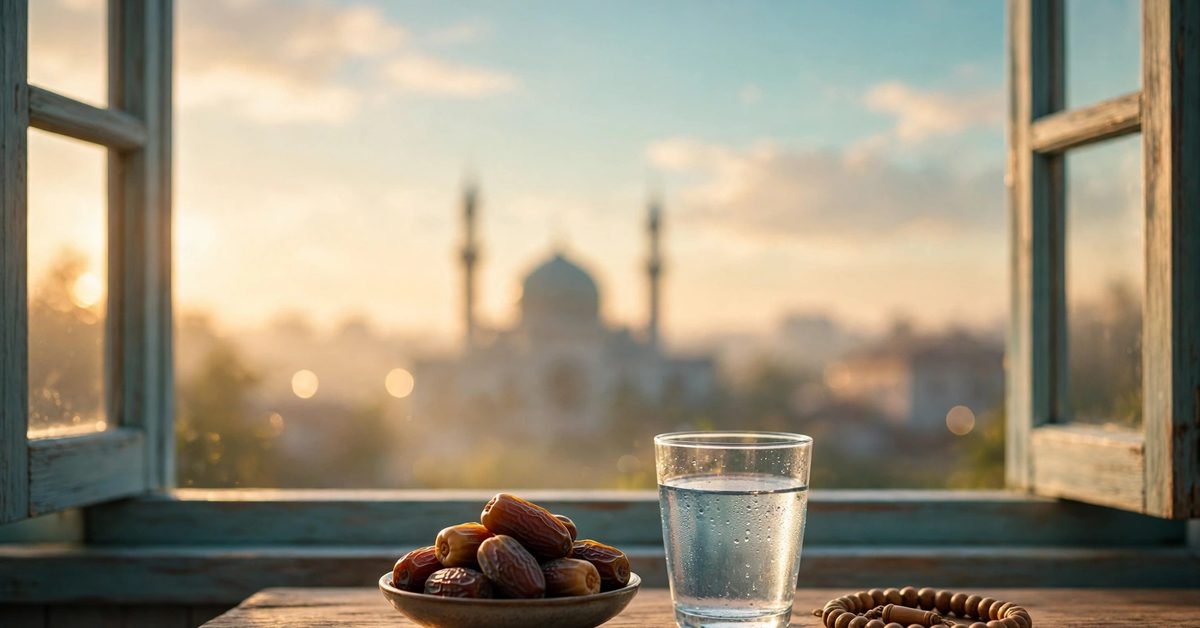
Fasting on Mondays and Thursdays is one of the easiest and most rewarding Sunnah fasts in Islam — two days a week, a simple routine, and your deeds are presented to Allah while you are fasting. This guide explains why the Prophet ﷺ chose these two days, how to fast them correctly, and how to make the habit last all year.
Why Did the Prophet ﷺ Fast on Mondays and Thursdays?
The Prophet ﷺ was keen to fast on Mondays and Thursdays, and he gave us three clear reasons.
1. Monday is the day he was born and received revelation
When the Prophet ﷺ was asked about fasting on Monday, he said:
ذَاكَ يَوْمٌ وُلِدْتُ فِيهِ وَيَوْمٌ بُعِثْتُ أَوْ أُنْزِلَ عَلَيَّ فِيهِ
“Dhaka yawmun wulidtu feehi wa yawmun bu’ithtu aw unzila ‘alayya feehi.”
“That is the day on which I was born, and the day on which I was commissioned with prophethood, or revelation was sent to me. (“Sahih Muslim 1162b)
Monday carries the memory of his birth and the first revelation — a day worth honouring with worship.
2. Our deeds are presented to Allah on these two days
Abu Hurayrah (may Allah be pleased with him) reported that the Prophet ﷺ said:
تُعْرَضُ الْأَعْمَالُ يَوْمَ الِاثْنَيْنِ وَالْخَمِيسِ، فَأُحِبُّ أَنْ يُعْرَضَ عَمَلِي وَأَنَا صَائِمٌ
“Tu’radul-a’malu yawmal-ithnayni wal-khamees, fa-uhibbu an yu’rada ‘amalee wa ana sa’im.”
“Deeds are presented (to Allah) on Monday and Thursday, and I love that my deeds be presented while I am fasting.” (Jami’ at-Tirmidhi 747, graded Hasan)
Imagine your week’s deeds being shown to Allah while you are in a state of fasting — hungry for His sake, patient, and obedient. That is the moment the Prophet ﷺ wanted to be caught in.
3. The gates of Paradise are opened, and forgiveness is offered
The Prophet ﷺ also said:
تُفْتَحُ أَبْوَابُ الْجَنَّةِ يَوْمَ الِاثْنَيْنِ وَيَوْمَ الْخَمِيسِ
“Tuftahu abwabul-jannati yawmal-ithnayni wa yawmal-khamees.”
“The gates of Paradise are opened on Monday and Thursday, and forgiveness is granted to every servant who does not associate anything with Allah — except a man who has a grudge against his brother. It is said: ‘Delay these two until they are reconciled.’ “(Sahih Muslim 2565a)
So Mondays and Thursdays are not only days of fasting; they are days of forgiveness. They are also a weekly reminder to repair broken relationships — a fast is incomplete if we carry a grudge into a day of mercy.
The Reward of Fasting
Fasting is the one act of worship Allah has kept specially for Himself. The Prophet ﷺ said that Allah said:
كُلُّ عَمَلِ ابْنِ آدَمَ لَهُ إِلَّا الصِّيَامَ فَإِنَّهُ لِي وَأَنَا أَجْزِي بِهِ
“Kullu ‘amali ibni Adama lahu illas-siyama fa-innahu lee wa ana ajzee bihi.”
“Every deed of the son of Adam is for him, except fasting, which is for Me, and I will give the reward for it.” (Sahih al-Bukhari 1904)
The same hadith tells us: الصِّيَامُ جُنَّةٌ — “As-siyamu junnah” — “Fasting is a shield.” It protects you from the Fire and from sin, because a fasting person guards their tongue, their temper and their eyes all day long.
Allah prescribed fasting so that we may attain taqwa — God-consciousness:
يَا أَيُّهَا الَّذِينَ آمَنُوا كُتِبَ عَلَيْكُمُ الصِّيَامُ كَمَا كُتِبَ عَلَى الَّذِينَ مِنْ قَبْلِكُمْ لَعَلَّكُمْ تَتَّقُونَ
“Ya ayyuhalladheena amanoo kutiba ‘alaykumus-siyamu kama kutiba ‘alalladheena min qablikum la’allakum tattaqoon.”
“O you who believe, fasting is prescribed for you as it was prescribed for those before you, that you may become righteous.” (Surah Al-Baqarah 2:183)
Two days a week of this training, every week, quietly changes a person’s character.
How to Fast on Mondays and Thursdays: Step by Step
1. Make the intention the night before
A voluntary fast needs an intention. Make it in your heart before you sleep on Sunday and Wednesday nights: I intend to fast tomorrow for the sake of Allah. There is no special wording to say aloud — the intention in the heart is enough.
2. Eat suhoor, even if it is small
Wake up before Fajr and eat something, even if it is only a few dates and a glass of water. Suhoor is blessed, and it makes the day far easier. The Prophet ﷺ encouraged suhoor for every fast, and skipping it only makes the day harder for no reward.
3. Fast from Fajr to Maghrib
From the start of Fajr until sunset, avoid food, drink and marital relations, just as in Ramadan. Keep your fast clean: guard your tongue from backbiting and arguments, and remember the words of the Prophet ﷺ — if someone argues with you, say, I am fasting.
4. Break your fast at Maghrib with dates and water
Follow the Sunnah: break your fast with fresh or dry dates, and if you have none, with water. Then make the beautiful dua of the fasting person:
ذَهَبَ الظَّمَأُ وَابْتَلَّتِ الْعُرُوقُ وَثَبَتَ الْأَجْرُ إِنْ شَاءَ اللَّهُ
“Dhahabaz-zama’u wabtallatil-‘urooqu wa thabatal-ajru in sha Allah.”
“The thirst has gone, the veins are moistened, and the reward is confirmed, if Allah wills.” (Sunan Abi Dawud 2357, graded Hasan)
The moment of iftar is a time when dua is accepted, so ask Allah for what you need before you eat.
5. Pray Maghrib, then eat a light meal
Do not turn iftar into a feast. A light, balanced meal is enough — heavy food after a day of fasting only brings sleepiness and regret. Save your appetite, and your energy, for the night prayer.
5 Practical Tips to Stay Consistent
1. Start with one day a week
If two days feels too much, start with Mondays only. Once that is easy, add Thursdays. A small fast you keep is better than an ambitious fast you abandon.
2. Prepare suhoor the night before
Set out your dates, water and a simple meal before bed. A 4 a.m. search for food is the fastest way to give up. If you live with family, take turns preparing suhoor for each other.
3. Drink well the evening before
Hydration starts the day before, not at suhoor. Drink plenty of water between Maghrib and bedtime on Sunday and Wednesday evenings, and avoid too much tea, coffee or salty food late at night.
4. Keep the day normal — and busy
A fast day is not a sick day. Go to work, study, and keep your routine. Light activity and a normal schedule make the hours pass quickly, while sitting at home thinking about food makes them crawl.
5. Fast together as a family
When husband and wife, or parents and teenage children, fast the same days, it becomes a shared habit instead of a lonely struggle. Break your fast together, and the children will grow up seeing Monday and Thursday as fasting days — just as they see Friday as Jumu’ah.
Common Mistakes to Avoid
Do not fast only when it is convenient. The reward is in the regularity. Pick your two days and protect them, even in summer and even on busy weeks.
If you owe missed Ramadan fasts, make those up first. The obligatory fasts take priority. If you keep a make-up fast on a Monday or Thursday, many scholars say you may hope for the reward of both intentions — but the make-up fast is the duty that must be completed.
Do not skip suhoor to make it harder. There is no extra reward in unnecessary hardship. Suhoor is part of the Sunnah of fasting.
Do not fast on Eid days. Fasting is forbidden on Eid al-Fitr and Eid al-Adha, and on the days of Tashreeq (11th, 12th and 13th of Dhul-Hijjah) — even if one of them falls on a Monday or Thursday.
Remember the white days too. The Prophet ﷺ also advised fasting three days of every month — the 13th, 14th and 15th of the Hijri month (Jami’ at-Tirmidhi 761) — and said that fasting three days a month is like fasting the whole year (Sahih Muslim 1162). When a white day falls on a Monday or Thursday, you gain both rewards with one fast.
Frequently Asked Questions
Is fasting on Mondays and Thursdays obligatory?
No. It is a Sunnah — a voluntary fast the Prophet ﷺ regularly kept. You are not sinful for missing it, but you miss a great reward when you do.
Can I fast only on Mondays, or only on Thursdays?
Yes. Each day stands on its own, and fasting one of them still earns its reward. Fasting both is better, but one is far better than none.
What if I forget to make the intention the night before?
For a voluntary fast, you may still make the intention in the morning, as long as you have not eaten or drunk anything since Fajr. To be safe, make it a habit to intend the night before.
Can I fast on Mondays and Thursdays while travelling or ill?
You are excused, just as in Ramadan — Allah does not burden a soul beyond what it can bear. Make the fast up on another day if you wish, or simply resume the following week.
Can children fast on Mondays and Thursdays?
Children who have not reached puberty are not obliged to fast, but older children can be encouraged to try a half-day fast, or to fast on school holidays, so the habit grows with them. Never force a young child to complete a full fast.
Does fasting on Mondays and Thursdays make up for missed Ramadan fasts?
No — a voluntary fast does not replace an obligatory one. Missed Ramadan fasts must still be made up, and they should be completed before Ramadan comes again.
Start This Monday
You do not need to wait for Ramadan to taste the sweetness of fasting. This Monday, make the intention, eat a simple suhoor, and let your deeds be presented to Allah while you are fasting. Two days a week, fifty-two weeks a year — that is more than a hundred days of fasting, built one Monday and one Thursday at a time.
If you or your children would like to learn the Quran with tajweed, book a free trial class with Noor Academy Pakistan today — our qualified, background-checked male and female teachers are available around the clock, and your first lesson is completely free.
Leave a Reply