

Category: Quran Learning

  • Reading Surah Al-Kahf on Friday: Benefits, Timing & Tips

    Reading Surah Al-Kahf on Friday: Benefits, Timing & Tips

    Reading Surah Al-Kahf on Friday is a beloved Sunnah: the Prophet, peace be upon him, promised that whoever recites it on Friday will have a light shining between this Friday and the next. Here are the authentic benefits, the best time to read it, and simple tips to make it a weekly habit.

    1. Why Surah Al-Kahf Has a Special Place on Friday

    Friday is the best day of the week in Islam — the Prophet, peace be upon him, called it the best day on which the sun has risen (Sahih Muslim, Hadith 854). Scholars have long connected this blessed day with specific acts of worship: the Jumu’ah prayer, sending abundant salawat on the Prophet, and reciting Surah Al-Kahf.

    Imam al-Shafi’i recommended reciting Surah Al-Kahf on Friday, based on authentic narrations from the Prophet, peace be upon him. This is not a cultural habit — it rests on hadith graded authentic by leading scholars. That is what makes it so special: a weekly appointment with a surah that protects, guides and illuminates.

    2. The Authentic Benefits of Reading Surah Al-Kahf on Friday

    The Prophet, peace be upon him, said: “Whoever recites Surah Al-Kahf on Friday, a light will shine for him between the two Fridays.” (al-Hakim, al-Mustadrak; Sunan al-Bayhaqi; graded sahih by al-Albani in Sahih al-Jami’, Hadith 6470)

    Scholars explain this light in several ways: guidance in your decisions through the week, protection from doubt and temptation, and a literal light on the Day of Judgment. Ibn Umar’s narration adds that this light stretches from the believer’s feet to the clouds of the sky (al-Hakim, al-Mustadrak; graded sahih by al-Albani).

    Other authentic benefits include:

    • Protection from the Dajjal’s trial. “Whoever memorizes ten verses from the beginning of Surah Al-Kahf will be protected from the Dajjal.” (Sahih Muslim, Hadith 809). Some narrations mention the last ten verses instead — both appear in Sahih Muslim.
    • Light to the Kaaba for the night reciter. “Whoever recites Surah Al-Kahf on the night of Friday, it will shine for him with a light between him and the Ancient House (the Kaaba).” (Sunan al-Darimi, Hadith 3407; graded sahih by al-Albani, Sahih al-Jami’ 6471). This is why many scholars count Thursday night after Maghrib as part of the Friday window.

    3. The Four Stories of Surah Al-Kahf in One Glance

    Surah Al-Kahf (Chapter 18) has 110 verses and four famous stories, each a lesson for a modern believer:

    1. The People of the Cave — young believers who fled a corrupt society and trusted Allah. Lesson: hold to your faith even when you stand alone (Surah Al-Kahf 18:13).
    2. The owner of the two gardens — a rich man proud of his wealth who forgot Allah. Lesson: wealth is a test, and every blessing belongs to Allah.
    3. Musa and Khidr — the great Prophet Musa learns patience and humility before one given special knowledge. Lesson: knowledge requires humility and trust in Allah’s wisdom.
    4. Dhul-Qarnayn — a just ruler who used his power to serve people. Lesson: power is a responsibility, not a privilege.

    These are the four trials of life — belief, wealth, knowledge and power. No wonder this surah protects from the Dajjal, whose greatest weapon will be deception in exactly these areas.

    4. The Best Time to Read Surah Al-Kahf on Friday

    The hadith covers both the night and the day of Friday. In Islamic reckoning, the “night of Friday” begins at Maghrib on Thursday — so you can start Thursday evening, a tradition in many families. The window continues until Maghrib on Friday.

    In practice: read it anytime from Thursday after Maghrib until Friday before Maghrib. The full surah takes about 30–45 minutes depending on fluency. If that feels long, split it into two halves — part Thursday night, part Friday.

    5. Simple Tips to Make It a Weekly Habit

    1. Set a Thursday-evening alarm. A reminder right after Maghrib on Thursday turns the intention into a habit.
    2. Pair it with Jumu’ah. Arrive early at the mosque and recite before the khutbah — the quiet time before prayer is ideal.
    3. Use a translation. Five minutes on the translation of what you recited deepens the reward many times over.
    4. Do it as a family. One person recites while children follow along — kids memorize the rhythm and vocabulary naturally.
    5. Start small. Reading half the surah every week consistently is better than reading it once and abandoning it.

    6. What If You Can’t Read Fluently Yet?

    You are not excluded from this reward. Listen to a slow recitation while following along in the mushaf — this builds both your connection and your reading skill. Then learn Nazra (fluent reading), followed by Tajweed, so you can recite every Friday with confidence.

    FAQs

    Q: When is the best time to read Surah Al-Kahf on Friday?

    A: Anytime from Thursday after Maghrib (the night of Friday) until Friday before Maghrib. Reading it on Thursday night is established by the narration in Sunan al-Darimi, so many readers begin then.

    Q: How long does it take to read Surah Al-Kahf?

    A: About 30–45 minutes at a moderate pace, depending on fluency. Splitting it across two sittings (Thursday night and Friday) makes it easy.

    Q: What if I cannot read Arabic fluently?

    A: Follow along with a slow recitation while looking at the text, and read the translation. Then learn Nazra reading so you can recite independently — with Tajweed for correct pronunciation.

    Q: Is it true the first ten verses protect from the Dajjal?

    A: Yes — “Whoever memorizes ten verses from the beginning of Surah Al-Kahf will be protected from the Dajjal” (Sahih Muslim, Hadith 809). Some narrations mention the last ten verses.

    Q: Do I get the full reward if I only read part of the surah?

    A: The specific reward of “light between the two Fridays” is for reciting the surah on Friday. Read as much as you can with consistency, and work toward the full surah — that steady progress is beloved to Allah.

    Want to read Surah Al-Kahf beautifully every Friday? Book a free trial class with a qualified Noor Academy Pakistan teacher and start your Quran reading journey today.

  • How to Perform Wudu Correctly: A Complete Step-by-Step Guide

    How to Perform Wudu Correctly: A Complete Step-by-Step Guide

    Wudu is the ritual ablution Muslims perform before prayer: washing the face, arms and feet and wiping the head, exactly as Allah commands in Surah Al-Ma’idah (5:6).

    The Prophet, peace be upon him, performed it with care and taught it by example. Follow this guide once or twice and the steps will become second nature.

    1. What Is Wudu and Why It Matters

    Wudu means purification through washing specific body parts with clean water, and it is a condition for Salah: the Prophet said the prayer of a person who has broken his wudu is not accepted until he performs it again (Sahih al-Bukhari, Hadith 135). The Prophet also called purity half of faith (Sahih Muslim, Hadith 223), and Allah says He loves those who purify themselves (Surah Al-Baqarah 2:222).

    2. The 4 Fard (Obligatory) Acts of Wudu

    Allah Himself describes wudu in the Quran (Surah Al-Ma’idah 5:6): wash your faces, wash your forearms up to and including the elbows, wipe your heads, and wash your feet up to and including the ankles. These four are the non-negotiable pillars:

    1. Washing the face, from hairline to chin and ear to ear
    2. Washing both arms up to and including the elbows
    3. Wiping at least part of the head with wet hands
    4. Washing both feet up to and including the ankles

    If any of these is missed, the wudu is not complete. Everything else you will read below is Sunnah: not strictly required, but completing and perfecting your wudu.

    3. The Sunnah Acts That Complete Your Wudu

    Start with a sincere intention in your heart, then say Bismillah — the Prophet said there is no wudu for one who does not mention the name of Allah at its beginning (Sunan Abu Dawud, Hadith 101). The majority of scholars count this as a recommended Sunnah.

    Other established Sunnah acts: wash your hands up to the wrists three times before starting, wash each part three times rather than once, and pass your wet fingers through a thick beard. Each comes from the Prophet’s own wudu, as preserved by his companions.

    4. How to Perform Wudu: The Step-by-Step Method

    Uthman ibn Affan demonstrated the Prophet’s own wudu step by step (Sahih al-Bukhari, Hadith 159; Sahih Muslim, Hadith 226). Follow this sequence:

    Step 1: Intention and Bismillah. Make the intention in your heart, then say Bismillah.

    Step 2: Wash the hands. Wash both hands up to the wrists three times, rubbing between the fingers.

    Step 3: Rinse the mouth. Take water with your right hand and rinse the mouth three times.

    Step 4: Clean the nose. Sniff water in with the right hand and blow it out with the left, three times.

    Step 5: Wash the face. Wash the whole face three times, from hairline to chin and ear to ear. Run your wet fingers through the beard.

    Step 6: Wash the arms. Wash the right arm, then the left, from fingertips up to and including the elbows, three times each.

    Step 7: Wipe the head. With wet hands, wipe the head once, passing them forward from front to back and back again. Wipe the inside and outside of the ears with the fingertips.

    Step 8: Wash the feet. Wash the right foot, then the left, up to and including the ankles, three times each, rubbing between the toes.

    Step 9: The dua after wudu. Say: “Ashhadu an la ilaha illallah, wa ashhadu anna Muhammadan abduhu wa rasuluhu.” The Prophet said that whoever performs wudu well and then says this will have the eight gates of Paradise opened for him (Sahih Muslim, Hadith 234).

    Wash each part fully but without wasting water — the Prophet forbade excess in wudu.

    5. What Breaks Your Wudu

    The main invalidators are: passing urine, stool or wind; deep sleep in which you lose awareness; and loss of consciousness. Mere doubt does not break wudu — the Prophet said a person should not leave his prayer until he hears a sound or smells something (Sahih al-Bukhari, Hadith 137).

    6. Common Mistakes to Avoid

    Rushing is the biggest mistake. Common errors: not washing the elbows and ankles completely, wiping the neck (for which there is no authentic basis), chatting through wudu and losing track of the sequence, and using excessive water. Follow the order and make sure water reaches every required spot.

    FAQs

    How many times should I wash each part in wudu?

    Washing each part three times is the Sunnah (Sahih al-Bukhari, Hadith 159). Washing once is valid; three times is complete and better.

    Is my wudu valid if I forget to say Bismillah?

    Yes. The majority of scholars — the Hanafi, Maliki and Shafi’i schools — hold that saying Bismillah at the start of wudu is a recommended Sunnah, not a condition. Forgetting it does not invalidate the wudu, but saying it is always better.

    Can I perform wudu with nail polish on?

    Wudu requires water to reach the nails, so waterproof nail polish must be removed first. Some breathable polishes claim water permeability, and scholars differ on them; the safe approach is to remove any barrier.

    Do I need wudu to read the Quran?

    You can recite from memory without wudu. The majority of scholars hold that touching the printed mushaf requires wudu, so keeping wudu for all Quran reading is best.

    Can I wipe over my socks instead of washing my feet?

    Yes, wiping over leather socks (khuffs) is an established Sunnah with conditions, notably that the socks were put on in a state of wudu and within the allowed time period.

    Is wudu valid if I forget the order of the steps?

    The sequence follows the order in the Quranic verse, and most scholars treat it as part of a proper wudu. If you skip a step, wash it and continue in order.

    Mastering wudu is the first step to a confident, connected prayer life, and a qualified teacher can correct the small details no article can show you. Noor Academy Pakistan offers one-to-one online Quran and Islamic classes for kids and adults — book a free trial class today.

  • What Is Noorani Qaida? A Complete Beginner’s Guide (2026)

    What Is Noorani Qaida? A Complete Beginner’s Guide (2026)

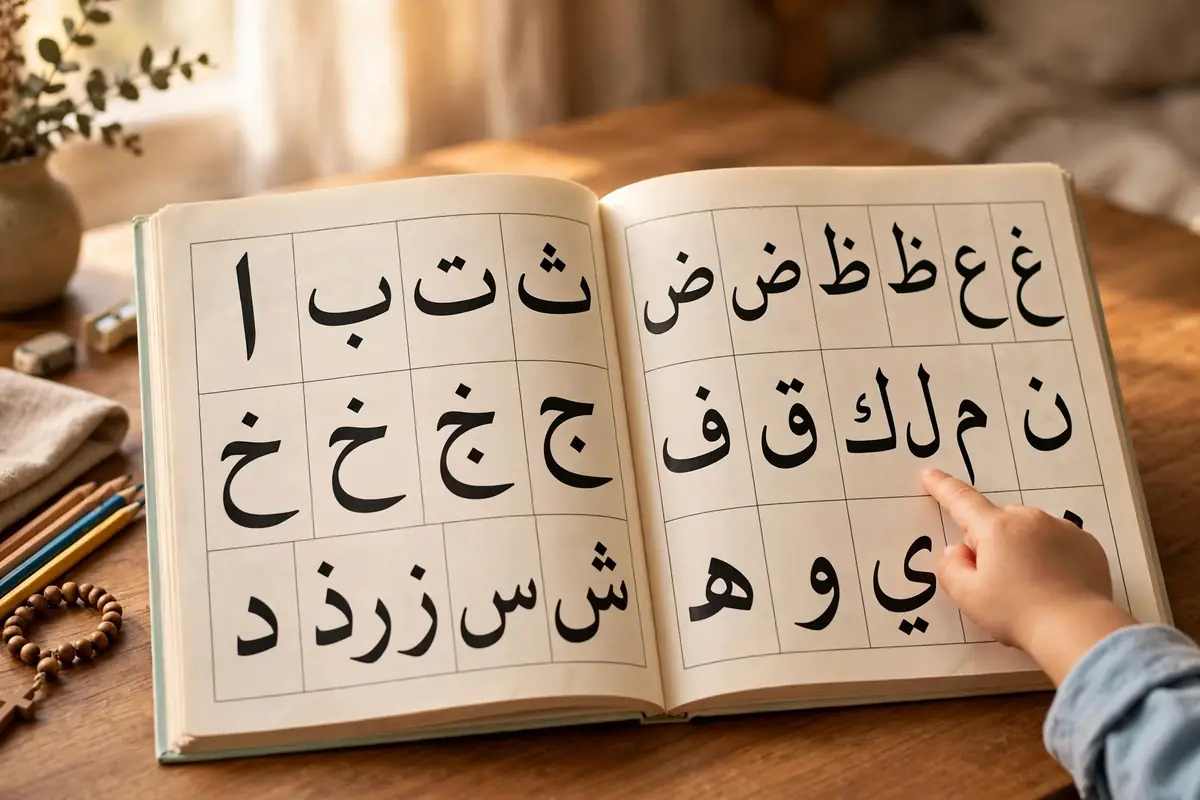
    Noorani Qaida is the foundational booklet that teaches the Arabic alphabet, pronunciation (Makharij) and basic Tajweed rules — the first step before reading the Quran.

    If you want to read the Quran but don’t know where to begin, start with Noorani Qaida. This small, time-tested booklet has

    taught millions of Muslims — children and adults alike — how to read the Arabic script of the Holy Quran from scratch.

    Why Do Beginners Start With Noorani Qaida?

    Reading the Quran well rests on a few core skills, and Noorani Qaida builds each of them step by step:

    • Recognize the Arabic letters in all their forms — isolated, and at the beginning, middle, and end of words.
    • Pronounce every letter from its correct Makhraj (point of articulation).
    • Master the Harakat — Fatha, Damma, Kasra — and Tanween.
    • Read joined words and short sentences fluently, the building blocks of Quranic verses.

    What Does Noorani Qaida Cover?

    A standard Noorani Qaida contains around 17 short lessons that build on one another:

    • The Arabic alphabet, from Alif to Ya.
    • Letters in their joined forms.
    • Harakat: Fatha, Damma, and Kasra.
    • Tanween (double vowel sounds).
    • Sukoon, Shaddah, and Madd (elongation) rules.
    • Combined practice exercises that join everything together.

    How Long Does It Take?

    With 20 to 30 minutes of daily practice, most children complete Noorani Qaida in 3 to 6 months. Adults, who can study with more deliberate focus, often finish in 2 to 4 months. Consistency matters far more than speed — a little every day beats one long session a week.

    Tips for Learning Noorani Qaida Online

    • Practice aloud every day — reading silently does not build pronunciation.
    • Record yourself and compare your recitation with your teacher’s.
    • Revise previous lessons before starting a new one.
    • Learn the Makharij of similar-sounding letters early, such as Seen and Saad.
    • Be patient with yourself — accuracy now saves years of correction later.

    At Noor Academy Pakistan, our qualified male and female teachers teach Noorani Qaida one-to-one to kids and adults worldwide — book a free trial class.