
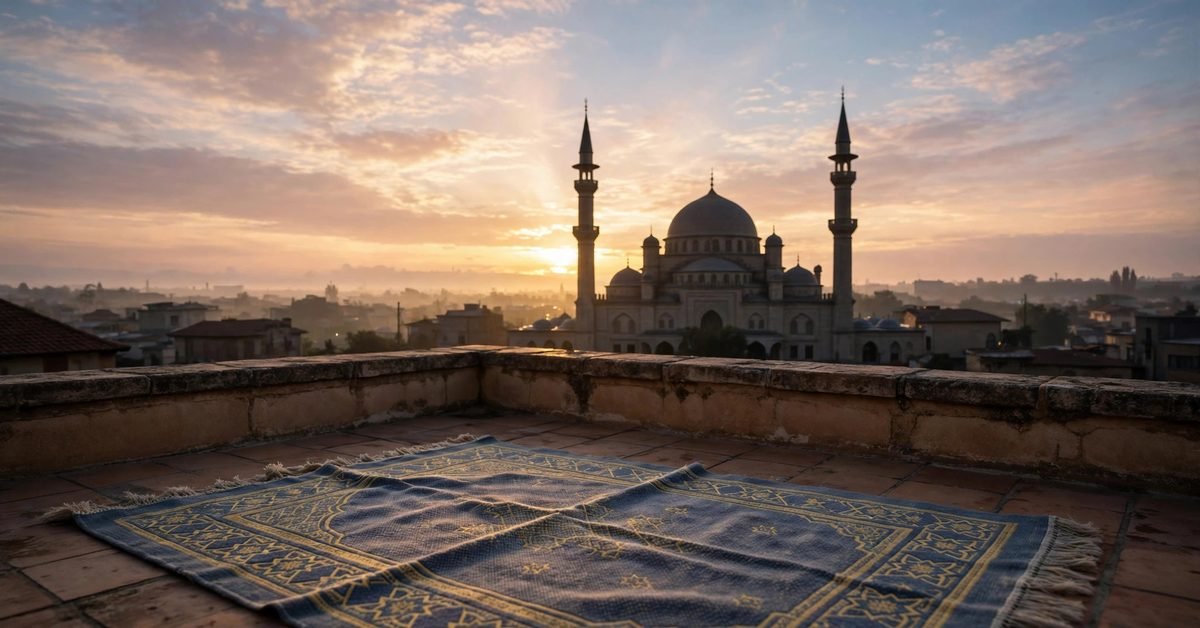
Fajr is the hardest prayer to catch and the most rewarding to keep — fix it, and the rest of your day falls into place.
Why Fajr Is Worth Waking Up For
Allah mentions the dawn prayer by name in the Quran:
أَقِمِ الصَّلَاةَ لِدُلُوكِ الشَّمْسِ إِلَىٰ غَسَقِ اللَّيْلِ وَقُرْآنَ الْفَجْرِ ۖ إِنَّ قُرْآنَ الْفَجْرِ كَانَ مَشْهُودًا
“Aqimiṣ-ṣalāta lidulūki sh-shamsi ilā ghasaqil-layli wa qur’ānal-fajr, inna qur’ānal-fajri kāna mashhūdā.”
“Establish prayer at the decline of the sun until the darkness of the night and [also] the Qur’an of dawn. Indeed, the recitation of dawn is ever witnessed.” (Surah Al-Isra 17:78)
Aishah (may Allah be pleased with her) reported that the Prophet ﷺ said:
رَكْعَتَا الْفَجْرِ خَيْرٌ مِنَ الدُّنْيَا وَمَا فِيهَا
“Rakʿatā al-fajri khayrun mina d-dunyā wa mā fīhā.”
“The two rak’ahs of Fajr are better than the world and all it contains.” (Sahih Muslim 725)
That is only the two Sunnah rak’ahs before the obligatory prayer. Jundub ibn Abdullah (may Allah be pleased with him) reported that the Prophet ﷺ said:
مَنْ صَلَّى الصُّبْحَ فَهُوَ فِي ذِمَّةِ اللَّهِ
“Man ṣallāṣ-ṣubḥa fa-huwa fī dhimmatillāh.”
“Whoever prays the morning prayer is under the protection of Allah.” (Sahih Muslim 657)
Uthman ibn Affan (may Allah be pleased with him) reported that the Prophet ﷺ said whoever prays Fajr in congregation is as if he stood the whole night in prayer. (Sahih Muslim 656)
The Prophet ﷺ also warned:
لَيْسَ صَلاَةٌ أَثْقَلَ عَلَى الْمُنَافِقِينَ مِنَ الْفَجْرِ وَالْعِشَاءِ وَلَوْ يَعْلَمُونَ مَا فِيهِمَا لأَتَوْهُمَا وَلَوْ حَبْوًا
“Laysa ṣalātun athqalu ʿalal-munāfiqīna minal-fajri wal-ʿishāʾ, wa law yaʿlamūna mā fīhimā la-atawhumā wa law ḥabwā.”
“No prayer is heavier upon the hypocrites than the Fajr and the Isha prayers, and if they knew what is in them, they would come to them even if they had to crawl.” (Sahih al-Bukhari 657; Sahih Muslim 651)
Fajr is a daily test of sincerity. Here is how to pass it.
1. Sleep Early — Fajr Starts the Night Before
Most missed Fajrs are decided at midnight, not at dawn. The Prophet ﷺ disliked sleeping before Isha and talking after it (Sahih al-Bukhari 568) — the Sunnah pattern is Isha, then sleep, not hours of scrolling.
Set a fixed bedtime that gives you at least seven hours before Fajr, and avoid heavy late meals and screens in the last hour before bed — both make waking up far harder.
2. Make a Sincere Intention and Ask Allah to Wake You
Before anything practical, make the intention: “O Allah, wake me for Fajr.” Go to bed wanting Fajr, not dreading the alarm — the scholars mention that a sincere intention before sleep is itself a means, and Allah wakes the one who truly wants to be woken.
3. Sleep in Wudu and End the Day with the Sleeping Dua
Sleeping in a state of wudu is a Sunnah of the Prophet ﷺ. He said:
إِذَا أَتَيْتَ مَضْجَعَكَ فَتَوَضَّأْ وُضُوءَكَ لِلصَّلَاةِ
“Idhā atayta maḍjaʿaka fa-tawaḍḍaʾ wuḍūʾaka liṣ-ṣalāh.”
“When you go to your bed, perform ablution as you do for prayer.” (Sahih al-Bukhari 247)
Then end your day with the dua the Prophet ﷺ said every night before sleeping:
بِاسْمِكَ اللَّهُمَّ أَمُوتُ وَأَحْيَا
“Bismika Allāhumma amūtu wa aḥyā.”
“In Your name, O Allah, I die and I live.” (Sahih al-Bukhari 6324)
When you wake, say the companion dua from the same hadith — “All praise belongs to Allah who gave us life after He caused us to die, and to Him is the resurrection” — and get up for Fajr.
4. Use Alarms That Actually Work
One alarm is not a plan — it is a hope. Use two or three alarms, five minutes apart, with a tone you cannot sleep through. Put your phone or alarm clock across the room so you must get out of bed to silence it. Once you are standing, you are halfway to the prayer mat.
5. Get a Fajr Buddy
Accountability changes everything. Pair up with a family member, a friend, or someone at the masjid: call each other at Fajr, or agree that whoever wakes first wakes the other. The Prophet ﷺ said whoever prays the two cool prayers (Fajr and Asr) will enter Paradise. (Sahih al-Bukhari 574)
6. Prepare Everything the Night Before
Lay out your clothes, keep your prayer mat and cap ready, and know exactly where your keys are if you walk to the masjid. A cold bathroom and a search for clean clothes at 5 am is enough to send anyone back to bed.
7. Never Give Up After Missing a Day
Everyone misses Fajr sometimes — even the Companions did. Missing one day is not failure; giving up after it is. If you wake after sunrise, pray Fajr as soon as you wake — this is called qada — including the two Sunnah rak’ahs first. Then fix the one thing that caused it — late night, no alarm, no intention.
FAQs
How many rak’ahs is Fajr?
Two Sunnah rak’ahs first, then two obligatory (Fard) rak’ahs — the Sunnah pair are among the most emphasised voluntary prayers in Islam.
What if I miss Fajr and wake up after sunrise?
Pray it as soon as you wake up — the two Sunnah rak’ahs first, then the two Fard rak’ahs.
Is it sinful to miss Fajr?
Deliberately neglecting any obligatory prayer is a serious matter. Oversleeping unintentionally is forgiven, but making it a habit through carelessness is not — which is why taking practical steps to wake up matters.
Can I pray Fajr at home, or must it be in the masjid?
Men are strongly encouraged to pray in congregation at the masjid, with the reward of praying the whole night. Women may pray at home, where their prayer is equally rewarded.
Is there a dua to help me wake up for Fajr?
No specific dua exists only for waking up — make a sincere intention, ask Allah in your own words, and end the night with “Bismika Allahumma amutu wa ahya” (Sahih al-Bukhari 6324).
Fajr is the prayer of the sincere — prayed while the world sleeps and rewarded beyond measure. Start tonight: sleep early, set your alarms, make your intention.
To learn the Quran fluently with Tajweed, book a free trial class with Noor Academy Pakistan today.
Leave a Reply