
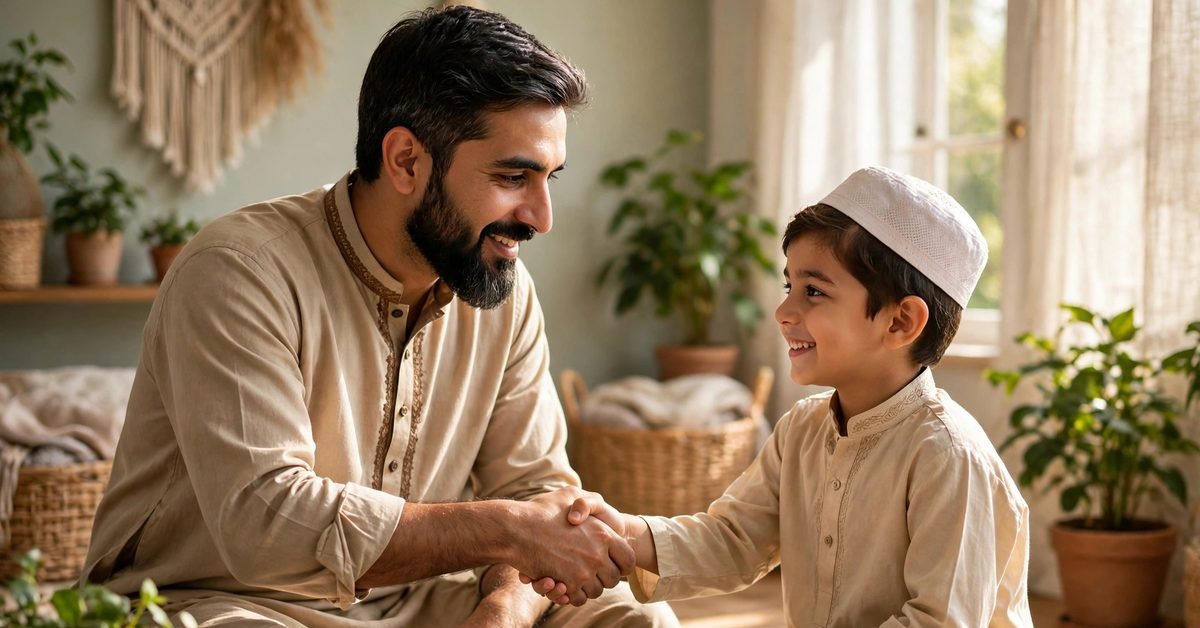
To teach your child good manners in Islam, model them every day, teach one habit at a time, and praise the effort — children copy what they see at home far more than what they are simply told.
What Akhlaq Really Means
Akhlaq is the character a person shows in everyday life: how they speak, how they treat others, and how they behave when no one is watching. In Islam, good manners are not an extra on top of faith. They are part of faith itself, and they shape how a child lives out everything else they learn.
Allah praised the character of the Prophet ﷺ:
وَإِنَّكَ لَعَلَىٰ خُلُقٍ عَظِيمٍ
“Wa innaka laʿalā khuluqin ʿaẓīm.”
“And indeed, you are of a great moral character.” (Surah Al-Qalam 68:4)
Why Good Manners Matter So Much
The Prophet ﷺ linked good character directly to being among the best of people. ʿAbdullah ibn ʿAmr (may Allah be pleased with him) reported that the Prophet ﷺ said:
إِنَّ خِيَارَكُمْ أَحَاسِنُكُمْ أَخْلَاقًا
“Inna khiyārakum aḥāsinukum akhlāqā.”
“The best among you are the best in character (having good manners).” (Sahih al-Bukhari 6035)
Good manners also carry enormous weight on the Day of Judgement. Abu Ad-Darda (may Allah be pleased with him) narrated that the Prophet ﷺ said:
مَا شَيْءٌ أَثْقَلُ فِي مِيزَانِ الْمُؤْمِنِ يَوْمَ الْقِيَامَةِ مِنْ خُلُقٍ حَسَنٍ
“Mā shayʾun athqalu fī mīzānil-muʾmini yawmal-qiyāmati min khuluqin ḥasan.”
“Nothing is heavier on the believer’s Scale on the Day of Judgement than good character.” (Jamiʿ at-Tirmidhi 2002)
Luqman’s Advice: A Parent’s Model for Manners
The Quran gives parents a beautiful model in the advice of Luqman to his son. He began with prayer, then moved straight to character:
يَا بُنَيَّ أَقِمِ الصَّلَاةَ وَأْمُرْ بِالْمَعْرُوفِ وَانْهَ عَنِ الْمُنكَرِ وَاصْبِرْ عَلَىٰ مَا أَصَابَكَ ۖ إِنَّ ذَٰلِكَ مِنْ عَزْمِ الْأُمُورِ
“Yā bunayya aqimiṣ-ṣalāta waʾmur bil-maʿrūfi wanha ʿanil-munkari waṣbir ʿalā mā aṣābak, inna dhālika min ʿazmil-umūr.”
“O my son, establish prayer, enjoin what is right, forbid what is wrong, and be patient over what befalls you. Indeed, [all] that is of the matters [requiring] determination.” (Surah Luqman 31:17)
Luqman then warned his son against arrogance and harsh speech, urging him to walk modestly and speak gently instead (Surah Luqman 31:18-19).
Prayer first, then doing good, then patience, humility, and gentle speech — a complete manners curriculum in three verses.
7 Everyday Habits That Build Good Manners
1. Speak truthfully, even when it is hard
Praise honesty, especially when it costs your child something. If a child admits breaking something, thank them first, then deal calmly with what happened.
2. Show respect to elders and kindness to younger children
Teach your child to greet elders politely, listen without interrupting, and speak gently to younger siblings — letting a grandparent go first, or helping a younger cousin.
3. Use polite words as a daily habit
“Please”, “thank you”, and a warm salam should be as normal as breakfast. Children learn them fastest by hearing their parents use them daily.
4. Share, and be generous with what they have
Start small: sharing a snack, taking turns, or giving a little sadaqah together. Praise generous choices warmly, rather than forcing a child to hand something over.
5. Practise patience in small moments
Patience is built in ordinary moments: waiting for a turn, or losing a game gracefully. Name the feeling — “I know waiting is hard” — and show the calm response yourself.
6. Speak gently and listen fully
Teach your child to speak without shouting, wait until someone has finished, and disagree without insults. When they speak to you, put the phone down and listen.
7. Keep promises and take responsibility
If you promise a story or a walk, keep it when you can. If your child makes a mistake, help them put it right — an apology, or a tidied room.
A Simple Daily Routine for Manners
Try this: in the morning, one kind word or salam to each family member; at mealtimes, wait for everyone, say Bismillah, and thank the person who cooked; in the evening, ask your child about one kind thing they did today. One habit at a time, repeated daily, shapes a child far more than a long lecture once a month.
Three Mistakes to Avoid
Do not expect perfection overnight — correct gently, then move on. Do not teach one standard for home and another for guests: children notice the gap at once. And do not only correct bad behaviour — notice and name the good. A child who hears “you were so patient just now” will want to be patient again.
FAQs
At what age should I start teaching my child good manners?
From the very beginning. Even toddlers learn by copying tone and kindness at home.
What if my child copies bad behaviour from school or friends?
Stay calm, explain the Islamic alternative in simple words, and model it at home.
How do I correct bad manners without shouting?
Correct privately where possible, keep your voice low, name the behaviour rather than labelling the child, and show the better way: “We speak kindly in this house — try that again in a gentle voice.”
Should manners come before Quran memorisation?
They go together. The Quran pairs worship with character, as in Luqman’s advice.
How can I teach teenagers good manners?
Give them respect and responsibility, listen to their views, and expect polite conversation in return.
Can a Quran teacher help with my child’s manners?
Yes. A good teacher models patience and gentle correction in every lesson.
Good manners are built in small moments, repeated with love at home. Start with one habit this week.
If you would like a caring teacher to support your child’s Quran learning and character, book a free trial class with Noor Academy Pakistan today.
Leave a Reply