
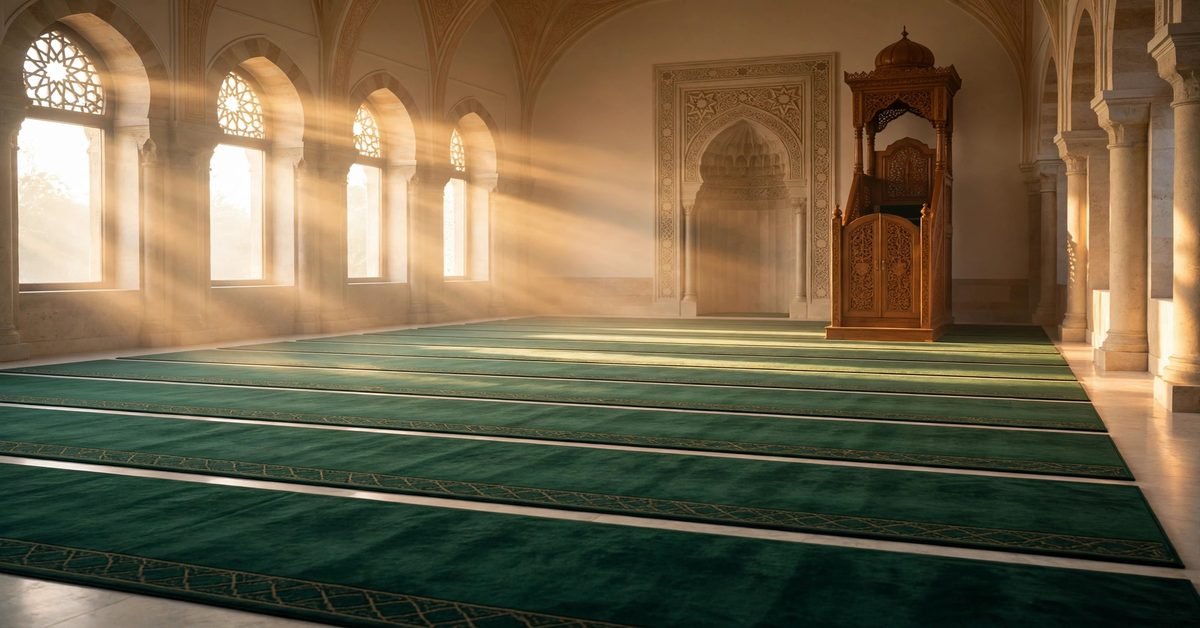
The twelve Sunnah prayers (Rawatib) are twelve extra rak’ahs prayed before and after the five obligatory prayers each day — two before Fajr, four before Dhuhr and two after it, two after Maghrib, and two after Isha. Whoever prays them daily is promised a house in Paradise.
Why the Twelve Rak’ahs Matter So Much
The obligatory prayers are the foundation of a Muslim’s day, but the Prophet ﷺ taught us that twelve voluntary rak’ahs prayed around them carry an extraordinary reward. Umm Habibah (may Allah be pleased with her), the wife of the Prophet ﷺ, reported that she heard him say:
مَنْ صَلَّى فِي يَوْمٍ وَلَيْلَةٍ ثِنْتَيْ عَشْرَةَ رَكْعَةً بُنِيَ لَهُ بَيْتٌ فِي الْجَنَّةِ
“Man ṣallā fī yawmin wa laylatin thintay ʿashrata rakʿatan buniya lahu baytun fī al-jannah.”
“Whoever prays twelve rak’ahs in a day and night, a house will be built for him in Paradise.” (Sahih Muslim 728)
Umm Habibah added that she never abandoned these prayers after hearing this — and neither did the narrators who heard it from her. The promise is not for a single day only; it is a daily opportunity, renewed every morning.
The Quran itself commands us to establish prayer and to bow with those who bow:
وَأَقِيمُوا الصَّلَاةَ وَآتُوا الزَّكَاةَ وَارْكَعُوا مَعَ الرَّاكِعِينَ
“Wa aqīmū aṣ-ṣalāta wa ātū az-zakāta warkaʿū maʿa ar-rākiʿīn.”
“And establish prayer and give zakah and bow with those who bow [in worship and obedience].” (Surah Al-Baqarah 2:43)
The Sunnah Rawatib are the natural companion to this command — they turn the five daily prayers from a bare obligation into a complete, protected act of worship.
The Twelve Sunnah Prayers at a Glance
The Prophet ﷺ listed the twelve rak’ahs in detail:
مَنْ صَلَّى فِي يَوْمٍ وَلَيْلَةٍ ثِنْتَيْ عَشْرَةَ رَكْعَةً بُنِيَ لَهُ بَيْتٌ فِي الْجَنَّةِ ، أَرْبَعًا قَبْلَ الظُّهْرِ وَرَكْعَتَيْنِ بَعْدَهَا ، وَرَكْعَتَيْنِ بَعْدَ الْمَغْرِبِ ، وَرَكْعَتَيْنِ بَعْدَ الْعِشَاءِ ، وَرَكْعَتَيْنِ قَبْلَ صَلَاةِ الْفَجْرِ
“Man ṣallā fī yawmin wa laylatin thintay ʿashrata rakʿatan buniya lahu baytun fī al-jannah, arbaʿan qabla aẓ-ẓuhr wa rakʿatayni baʿdahā, wa rakʿatayni baʿda al-maghrib, wa rakʿatayni baʿda al-ʿishā’, wa rakʿatayni qabla ṣalāt al-fajr.”
“Whoever prays twelve rak’ahs in a day and night, a house will be built for him in Paradise: four before Dhuhr, two after it, two after Maghrib, two after Isha, and two before Fajr prayer.” (Jami at-Tirmidhi 415; graded Hasan Sahih)
Here they are, prayer by prayer:
| Prayer | Sunnah rak’ahs | When |
|---|---|---|
| Fajr | 2 | Before the obligatory prayer |
| Dhuhr | 4 + 2 | Four before, two after |
| Asr | — | No regular Sunnah attached |
| Maghrib | 2 | After the obligatory prayer |
| Isha | 2 | After the obligatory prayer |
| Total | 12 |
The Two Rak’ahs Before Fajr: The Most Valuable of All
Of the twelve, the two rak’ahs before Fajr hold a special place. The Prophet ﷺ said:
رَكْعَتَا الْفَجْرِ خَيْرٌ مِنَ الدُّنْيَا وَمَا فِيهَا
“Rakʿatā al-fajri khayrun mina ad-dunyā wa mā fīhā.”
“The two rak’ahs before Fajr are better than the world and everything in it.” (Sahih Muslim 725)
Two short rak’ahs — prayed in the quiet minutes before the dawn prayer — are worth more than the whole world. If you can build only one of the twelve into your routine, start here: pray them at home before leaving for the mosque, or in the mosque before the congregation begins.
The Four Before Dhuhr and Two After It
Dhuhr carries the largest share of the twelve: four rak’ahs before the obligatory prayer and two after it. The four before Dhuhr are prayed as two sets of two — a calm pause in the middle of a busy working day — and the two after close the midday prayer before the afternoon begins.
A small difference in the reports is worth knowing: Ibn Umar (may Allah be pleased with him) described the Prophet’s ﷺ practice as ten rak’ahs — two before Dhuhr instead of four (Sahih al-Bukhari 1180). Both reports are authentic; praying four before Dhuhr follows the fuller count of twelve. The point is consistency, not argument over the count.
The Two After Maghrib and the Two After Isha
Maghrib and Isha each close with two rak’ahs, prayed immediately after the obligatory prayer while you are already standing on your prayer mat. There is no need to return later — finish the fard, then pray two more rak’ahs before you move on. Together, these four rak’ahs bookend the evening: two as the sun sets, two before the night’s rest.
How to Build the Habit of the Twelve Sunnah Prayers
Twelve extra rak’ahs a day take about fifteen minutes in total, spread across the whole day. Here is how to make them stick:
1. Start with Fajr. The two before Fajr are the most rewarding and the easiest to attach to a prayer you already perform. Master these first, then add the rest one prayer at a time.
2. Pray them where you are. The Sunnah Rawatib are best prayed at home — the Prophet ﷺ prayed most of his voluntary prayers at home — but the mosque is fine too. Do not let the perfect place stop you from praying them at all.
3. Attach them to the fard. Pray the “before” Sunnah as soon as you finish wudu, and the “after” Sunnah before you pick up your phone. The gap between fard and Sunnah is where the habit dies.
4. Keep them short. Recite short surahs — Al-Ikhlas, Al-Falaq, An-Nas — in the Sunnah rak’ahs. Length is not the measure; regularity is.
5. Never give up after a missed day. If you miss the Sunnah prayers one day, simply resume the next. The narrators of the hadith kept them for life not because they never missed, but because they always came back.
What About Fridays?
On Friday, Jumu’ah prayer replaces Dhuhr for those who attend it, and there is no regular Sunnah prayer before Jumu’ah. After Jumu’ah, the Prophet ﷺ prayed four rak’ahs of Sunnah (Sahih Muslim 881). So on Friday, pray the two before Fajr, the four after Jumu’ah, and the two after Maghrib and the two after Isha — and your twelve are complete.
Frequently Asked Questions
Are the twelve Sunnah prayers obligatory?
No. They are Sunan Mu’akkadah — strongly emphasised Sunnah prayers that the Prophet ﷺ prayed regularly. Missing them is not a sin, but praying them consistently carries the promise of a house in Paradise.
What if I miss some of the twelve Sunnah prayers?
Simply resume the next day. If you miss the two before Fajr, you may pray them after the Fajr prayer or after sunrise — scholars allow making them up.
Do women pray the same twelve Sunnah prayers?
Yes. The twelve Sunnah prayers apply equally to men and women. Women pray them at home, which is the best place for their voluntary prayers.
Can I pray the four before Dhuhr as one prayer of four rak’ahs?
The four before Dhuhr are prayed as two sets of two rak’ahs, with a tasleem (salam) after each pair — the same way the Prophet ﷺ prayed the voluntary prayers of the day and night, two by two.
Is it better to pray Sunnah prayers at home or in the mosque?
At home is better for voluntary prayers, including the Sunnah Rawatib. But praying them in the mosque is also good — what matters most is that they are prayed.
How long do the twelve Sunnah prayers take?
About fifteen minutes in total across the whole day — roughly two to three minutes per pair of rak’ahs. It is one of the smallest investments in a Muslim’s day for one of the greatest rewards.
Start Tonight
Twelve rak’ahs. Fifteen minutes. A house in Paradise. The Sunnah Rawatib are the easiest addition to a Muslim’s day with the greatest return — and every day you pray them is another day the promise applies to you.
Begin tonight, after Isha: two rak’ahs. Then tomorrow before Fajr: two more. Within a week, the twelve will feel like part of the prayer itself, not an addition to it.
Want your child to learn the Sunnah prayers with correct recitation and tajweed? Book a free trial class at Noor Academy Pakistan — our qualified male and female teachers help children and adults build a complete prayer routine, one step at a time. Visit nooracademypakistan.com to book your free trial today.
Leave a Reply