
Category: Islamic Knowledge

  • Dua for Exams: 6 Authentic Duas for Student Success

    Dua for Exams: 6 Authentic Duas for Student Success

    The best dua for exams is “Rabbi zidni ‘ilma” — “My Lord, increase me in knowledge” (Surah Ta-Ha 20:114) — said before every study session and before opening the exam paper. Paired with Prophet Musa’s dua for a calm heart and an easy task (Surah Ta-Ha 20:25-28), it covers everything a student needs: memory, focus, calm nerves and trust in Allah. Below are six authentic duas for exams from the Quran and Sunnah — each with Arabic, meaning and exactly when to recite it — plus a simple exam-week routine.

    Why Dua Matters Before an Exam

    An exam tests more than what you studied — it tests memory under pressure, nerves and trust in Allah. Dua puts the heart right before the pen starts moving, and studying itself is an act of worship. The Prophet ﷺ said:

    مَنْ سَلَكَ طَرِيقًا يَلْتَمِسُ فِيهِ عِلْمًا سَهَّلَ اللَّهُ لَهُ بِهِ طَرِيقًا إِلَى الْجَنَّةِ

    “Man salaka tariqan yaltamisu fihi ‘ilman, sahhalallahu lahu bihi tariqan ilal-jannah.”

    “Whoever takes a path upon which to obtain knowledge, Allah makes the path to Paradise easy for him.” (Sahih Muslim 2699)

    He ﷺ also said that when Allah intends good for a person, He gives him understanding of the religion (Sahih al-Bukhari 71). The hours at the desk are not separate from your deen — the dua for exams is part of the preparation, not a shortcut around it.

    1. Rabbi Zidni ‘Ilma — The Foundation Dua for Exams

    This is the shortest and most powerful dua for exams, taught directly by Allah in the Quran:

    رَبِّ زِدْنِي عِلْمًا

    “Rabbi zidni ‘ilma.”

    “My Lord, increase me in knowledge.” (Surah Ta-Ha 20:114)

    It is the only place in the Quran where Allah commands the Prophet ﷺ to ask for more of something — not wealth, not status, but knowledge. Say it before every study session and again as you sit down to write the paper.

    2. Prophet Musa’s Dua — Before the Biggest Test of His Life

    When Allah commanded Musa (AS) to face Pharaoh — the hardest test of his life — he asked first for an open heart, an easy task and a fluent tongue:

    رَبِّ اشْرَحْ لِي صَدْرِي وَيَسِّرْ لِي أَمْرِي وَاحْلُلْ عُقْدَةً مِّن لِّسَانِي يَفْقَهُوا قَوْلِي

    “Rabbi ishrah li sadri, wa yassir li amri, wahlul ‘uqdatan min lisani, yafqahu qawli.”

    “My Lord, expand for me my breast, and ease for me my task, and untie the knot from my tongue, that they may understand my speech.” (Surah Ta-Ha 20:25-28)

    For a student, it answers the three exam fears: a tight chest — “expand my breast”; an impossible paper — “ease my task”; words that will not come — “untie the knot from my tongue”. Say it the night before the exam and again on the morning of the paper.

    3. The Study-Session Dua — Before Opening the Book

    The Prophet ﷺ taught a dua to say before studying, asking Allah to make what you learn beneficial and to help you retain it:

    اللَّهُمَّ انْفَعْنِي بِمَا عَلَّمْتَنِي وَعَلِّمْنِي مَا يَنْفَعُنِي وَزِدْنِي عِلْمًا

    “Allahumma infa’ni bima ‘allamtani, wa ‘allimni ma yanfa’uni, wa zidni ‘ilma.”

    “O Allah, benefit me with what You have taught me, teach me what will benefit me, and increase me in knowledge.” (Jami` at-Tirmidhi 3599; graded Sahih by Al-Albani; also Sunan Ibn Majah 251)

    Say it before opening the book and again after finishing a study session — it asks for retention as well as new learning.

    4. The Dua for Ease — When the Paper Feels Impossible

    Every student knows the moment: you turn the paper over, and a question looks blank. The Prophet ﷺ taught a dua for exactly that moment:

    اللَّهُمَّ لَا سَهْلَ إِلَّا مَا جَعَلْتَهُ سَهْلًا وَأَنْتَ تَجْعَلُ الْحَزْنَ إِذَا شِئْتَ سَهْلًا

    “Allahumma la sahla illa ma ja’altahu sahlan, wa anta taj’alul-hazna idha shi’ta sahlan.”

    “O Allah, there is no ease except what You make easy, and You make the difficult easy if You will.” (Sahih Ibn Hibban 2427; graded Sahih)

    Whisper it when you sit down, when a question stumps you, or when panic rises. Ease is not a property of the question — Allah grants it when He wills. Then move on and return later.

    5. The Morning Dua for Beneficial Knowledge

    On the morning of the exam, start the day the way the Prophet ﷺ started every day — after Fajr, he would say:

    اللَّهُمَّ إِنِّي أَسْأَلُكَ عِلْمًا نَافِعًا وَرِزْقًا طَيِّبًا وَعَمَلًا مُتَقَبَّلًا

    “Allahumma inni as’aluka ‘ilman nafi’an, wa rizqan tayyiban, wa ‘amalan mutaqabbalan.”

    “O Allah, I ask You for beneficial knowledge, good provision, and accepted deeds.” (Sunan Ibn Majah 925; graded Sahih)

    Notice the first request: not just knowledge, but beneficial knowledge. On exam morning this sets the intention right — you are asking Allah to make what you learned useful in this life and the next.

    6. With Hardship Comes Ease — The Promise to Hold On To

    When revision feels endless, or a paper goes badly, hold on to the verse Allah repeats twice for emphasis:

    فَإِنَّ مَعَ الْعُسْرِ يُسْرًا إِنَّ مَعَ الْعُسْرِ يُسْرًا

    “Fa inna ma’al-‘usri yusra, inna ma’al-‘usri yusra.”

    “For indeed, with hardship [will be] ease. Indeed, with hardship [will be] ease.” (Surah Ash-Sharh 94:5-6)

    Allah says it twice because the heart needs to hear it twice. One difficult paper does not define your future.

    A Simple Exam-Week Routine

    1. Night before: revise lightly, sleep early, and recite Musa’s dua (Surah Ta-Ha 20:25-28) and “Rabbi zidni ‘ilma” before sleeping.
    2. Exam morning: pray Fajr, say the morning dua (Sunan Ibn Majah 925), eat a proper breakfast and arrive early.
    3. Before the paper: say Bismillah, then “Rabbi zidni ‘ilma”, then the dua for ease (Sahih Ibn Hibban 2427).
    4. During the paper: if a question stumps you, pause, whisper the dua for ease, move to the next question and return later.
    5. After the paper: say Alhamdulillah, do not dwell on mistakes, and start preparing for the next one.

    Two Mistakes to Avoid

    Dua without study. The Prophet ﷺ taught reliance on Allah with effort — like the birds that leave their nests hungry and return full (Jami` at-Tirmidhi 2344). Dua works alongside revision, not as a replacement for it.

    Unverified duas. Many “exam duas” shared online have no authentic source — for example, the widely forwarded “Allahumma inni as’aluka fahmal-nabiyyin” has no established chain to the Prophet ﷺ. Stick to the Quran and the graded hadith above, and your dua rests on solid ground.

    FAQs

    What is the best dua for exams?

    “Rabbi zidni ‘ilma” — “My Lord, increase me in knowledge” (Surah Ta-Ha 20:114). The shortest authentic dua for exams, taught directly in the Quran — say it before studying and before opening the paper.

    Which dua should I recite before starting the exam paper?

    Say Bismillah, then “Rabbi zidni ‘ilma” (Surah Ta-Ha 20:114), then “Allahumma la sahla illa ma ja’altahu sahlan, wa anta taj’alul-hazna idha shi’ta sahlan” (Sahih Ibn Hibban 2427) — “O Allah, there is no ease except what You make easy, and You make the difficult easy if You will.”

    Is there a dua to remember what I studied?

    Yes — the study dua from Jami` at-Tirmidhi 3599: “Allahumma infa’ni bima ‘allamtani, wa ‘allimni ma yanfa’uni, wa zidni ‘ilma.” Say it before and after every study session, and pair it with regular revision.

    Can I make dua for exams in English?

    Yes. Allah understands every language, and a dua made with a present heart in English is better than Arabic words recited without understanding. Still, learning the short Arabic duas above brings the reward of following the Prophet’s exact words.

    What should parents recite for their children’s exams?
    The same duas — especially “Rabbi zidni ‘ilma” — and teach your children to say them too. The Prophet ﷺ said, “Three supplications are answered without a doubt: the oppressed, the traveller, and a parent for his child.” (Jami` at-Tirmidhi 1905; graded Hasan)

    Does dua replace studying?
    No. Dua for exams is one half of the equation — the other half is preparation. Prepare thoroughly, then trust Allah with the result, whatever it is.

    If you would like your children to learn the Quran with qualified teachers from home, book a free trial class at Noor Academy Pakistan — visit nooracademypakistan.com or message us on WhatsApp at +92 346-1870-400.

  • Dua for Rizq: 7 Keys to Halal Earnings and a Good Job

    Dua for Rizq: 7 Keys to Halal Earnings and a Good Job

    The best dua for rizq is the one the Prophet ﷺ recited every morning after Fajr: “Allahumma inni as’aluka ‘ilman nafi’an wa rizqan tayyiban wa ‘amalan mutaqabbalan” (Sunan Ibn Majah 925). Here are seven authentic duas and Sunnah keys for halal earnings, a good job and barakah — each with the Arabic text, its meaning, and when to recite it.

    What Is Rizq?

    Rizq means provision — not only money, but health, knowledge, a good spouse, righteous children and peace of mind. Allah calls Himself Ar-Razzaq, the Provider, and guarantees the provision of every creature:

    وَمَا مِن دَابَّةٍ فِي الْأَرْضِ إِلَّا عَلَى اللَّهِ رِزْقُهَا

    “Wa ma min dabbatin fil-ardi illa ‘alallahi rizquha.”

    “And there is no creature on earth but that upon Allah is its provision.” (Surah Hud 11:6)

    1. The Morning Dua for Rizq

    Umm Salamah (RA) narrated that when the Prophet ﷺ finished Fajr and gave the salam, he would say:

    اللَّهُمَّ إِنِّي أَسْأَلُكَ عِلْمًا نَافِعًا وَرِزْقًا طَيِّبًا وَعَمَلًا مُتَقَبَّلًا

    “Allahumma inni as’aluka ‘ilman nafi’an, wa rizqan tayyiban, wa ‘amalan mutaqabbalan.”

    “O Allah, I ask You for beneficial knowledge, good provision, and accepted deeds.” (Sunan Ibn Majah 925; graded Sahih)

    Three requests in one sentence. Say it right after Fajr — before your phone, before work.

    2. The Dua for Halal Sufficiency

    When money feels tight, the Prophet ﷺ taught a dua that asks Allah to make the halal enough:

    اللَّهُمَّ اكْفِنِي بِحَلَالِكَ عَنْ حَرَامِكَ وَأَغْنِنِي بِفَضْلِكَ عَمَّنْ سِوَاكَ

    “Allahumma akfini bihalalika ‘an haramika, wa aghnini bifadlika ‘amman siwak.”

    “O Allah, suffice me with what You have made lawful, away from what You have made unlawful, and make me independent of all others through Your bounty.” (Jami` at-Tirmidhi 3563; graded Hasan)

    Recite it after salah, especially when a tempting but doubtful earning comes your way.

    3. Seeking Refuge from Poverty

    The Prophet ﷺ also taught us to seek Allah’s protection from poverty itself:

    اللَّهُمَّ إِنِّي أَعُوذُ بِكَ مِنَ الْفَقْرِ وَالْقِلَّةِ وَالذِّلَّةِ وَأَعُوذُ بِكَ مِنْ أَنْ أَظْلِمَ أَوْ أُظْلَمَ

    “Allahumma inni a’udhu bika minal-faqri, wal-qillati, wadh-dhillati, wa a’udhu bika min an azlima aw uzlam.”

    “O Allah, I seek refuge in You from poverty, scarcity, and humiliation, and I seek refuge in You from oppressing others or being oppressed.” (Sunan Abi Dawud 1544; graded Sahih)

    It pairs poverty with injustice: rizq that comes through wronging others is never blessed.

    4. “You Are the Best of Providers”

    In Surah Al-Ma’idah, Prophet Isa (AS) made a dua for provision ending with one of the most beautiful names of Allah:

    وَارْزُقْنَا وَأَنتَ خَيْرُ الرَّازِقِينَ

    “Warzuqna wa anta khayrur-raziqeen.”

    “And provide for us, and You are the best of providers.” (Surah Al-Ma’idah 5:114)

    Whenever you feel your provision depends on a boss, a client or a job market, this verse resets the heart: every provider in your life is only a means — Allah is the Provider.

    5. Istighfar Opens the Doors of Rizq

    The Prophet Nuh (AS) told his people that seeking forgiveness brings provision in this world, not only the next:

    فَقُلْتُ اسْتَغْفِرُوا رَبَّكُمْ إِنَّهُ كَانَ غَفَّارًا يُرْسِلِ السَّمَاءَ عَلَيْكُم مِّدْرَارًا وَيُمْدِدْكُم بِأَمْوَالٍ وَبَنِينَ

    “Faqultu istaghfiru rabbakum, innahu kana ghaffara. Yursilis-sama’a ‘alaykum midrara, wa yumdidkum bi-amwalin wa banin.”

    “And I said: Ask forgiveness of your Lord. Indeed, He is ever a Perpetual Forgiver. He will send [rain from] the sky upon you in [continuing] showers, and give you increase in wealth and children.” (Surah Nuh 71:10-11)

    Make istighfar a daily habit — 100 times a day, as the Prophet ﷺ did.

    6. The Promise Behind Every Dua for Rizq

    Allah ties provision to taqwa — consciousness of Him:

    وَمَن يَتَّقِ اللَّهَ يَجْعَل لَّهُ مَخْرَجًا وَيَرْزُقْهُ مِنْ حَيْثُ لَا يَحْتَسِبُ

    “Wa man yattaqillaha yaj’al lahu makhrajan, wa yarzuqhu min haythu la yahtasib.”

    “And whoever fears Allah — He will make for him a way out, and will provide for him from where he does not expect.” (Surah At-Talaq 65:2-3)

    Guard the five prayers, avoid haram income even when it pays more, and trust the promise.

    7. Keep Family Ties: A Sunnah That Expands Rizq

    The Prophet ﷺ connected two things most people keep separate — family and finances:

    مَنْ أَحَبَّ أَنْ يُبْسَطَ لَهُ فِي رِزْقِهِ وَيُنْسَأَ لَهُ فِي أَثَرِهِ فَلْيَصِلْ رَحِمَهُ

    “Man ahabba an yubsata lahu fi rizqihi, wa yunsa’a lahu fi atharihi, falyasil rahimah.”

    “Whoever would like his provision to be increased and his life span to be extended, should uphold the ties of kinship.” (Sahih al-Bukhari 5986)

    A call to your parents, helping a relative, mending a broken relationship — these are not separate from your rizq. They are part of it.

    Dua for Rizq Plus Effort: The Birds Leave Their Nests

    Dua for rizq is never a substitute for effort. The Prophet ﷺ said:

    لَوْ أَنَّكُمْ كُنْتُمْ تَوَكَّلُونَ عَلَى اللَّهِ حَقَّ تَوَكُّلِهِ لَرُزِقْتُمْ كَمَا يُرْزَقُ الطَّيْرُ تَغْدُو خِمَاصًا وَتَرُوحُ بِطَانًا

    “Law annakum kuntum tawakkaluna ‘alallahi haqqa tawakkulihi, laruzitum kama yurzaqut-tayr, taghdu khimasan wa taruhu bitana.”

    “If you were to rely upon Allah with the reliance He is due, He would provide for you as He provides for the birds: they go out in the morning hungry and return in the evening full.” (Jami` at-Tirmidhi 2344; graded Hasan Sahih)

    The birds do not stay in their nests waiting — they fly out. Send the application, learn the skill, open the shop, and make dua for rizq while you work.

    A Simple Daily Rizq Routine

    1. After Fajr: recite the morning dua (Sunan Ibn Majah 925) and the halal sufficiency dua (Jami` at-Tirmidhi 3563).
    2. During the day: work with excellence and keep earnings clean — no interest, no deception, no haram.
    3. Between tasks: 100 istighfar; it takes less than five minutes.
    4. Every week: call or visit a relative — keep the ties the Prophet ﷺ tied to provision.
    5. Before sleeping: thank Allah for today’s rizq and ask for tomorrow’s.

    FAQs

    What is the best dua for rizq?
    The morning dua after Fajr — “Allahumma inni as’aluka ‘ilman nafi’an wa rizqan tayyiban wa ‘amalan mutaqabbalan” (Sunan Ibn Majah 925). The Prophet ﷺ recited it every morning.

    Can I recite a dua for rizq in English?
    Yes. Allah understands every language, and a dua made with a present heart in English is better than Arabic words recited without understanding. Still, learning the short Arabic duas above brings the reward of following the Prophet’s ﷺ exact words.

    How many times should I recite the dua for rizq?
    Once after Fajr is the Sunnah for the morning dua. The others can be recited whenever you need them — after any salah, before a job interview, or when starting work. Consistency matters more than number.

    Does a dua for rizq work without effort?
    No. The Prophet ﷺ taught tawakkul with effort, not instead of it — the birds fly out hungry and return full (Jami` at-Tirmidhi 2344). Make the dua, then take the means and trust Allah with the result.

    What is the dua for rizq in the Quran?
    “Warzuqna wa anta khayrur-raziqeen” — “And provide for us, and You are the best of providers” (Surah Al-Ma’idah 5:114), from the dua of Prophet Isa (AS). The Quran also links istighfar to increased wealth and children (Surah Nuh 71:10-12).

    If you would like your children to learn the Quran with qualified teachers from home, book a free trial class at Noor Academy Pakistan — visit nooracademypakistan.com or message us on WhatsApp at +92 346-1870-400.
  • How to Perform Tayammum: A Step-by-Step Guide

    How to Perform Tayammum: A Step-by-Step Guide

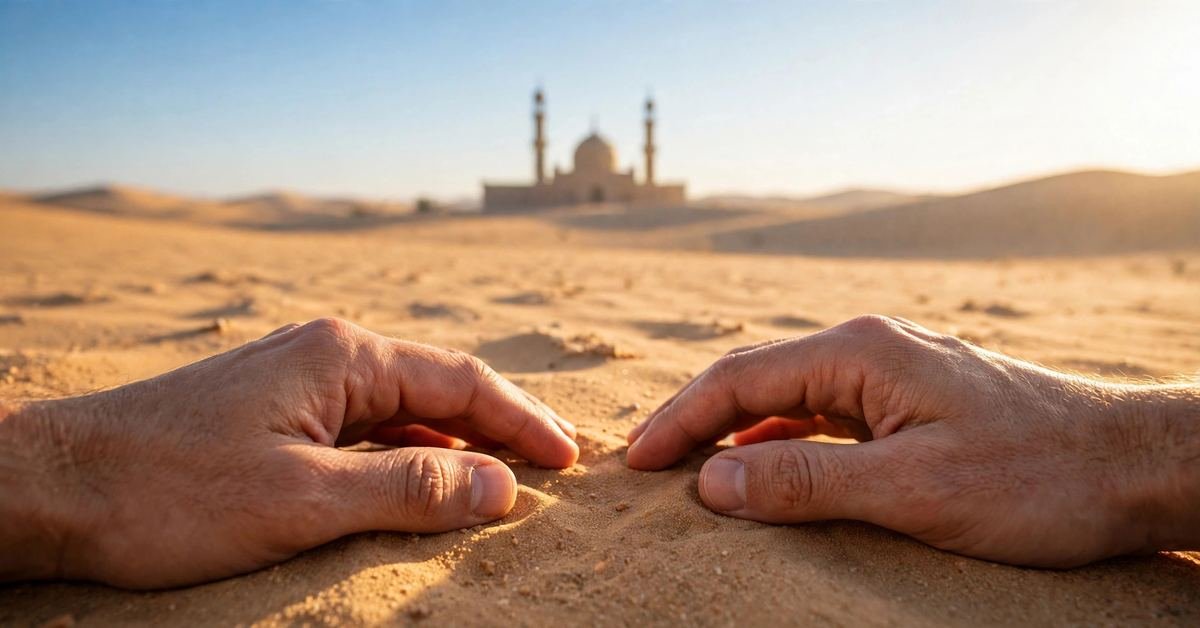
    No water? You can still pray. Tayammum — dry ablution with clean earth — replaces wudu and ghusl when water is unavailable or cannot be used, and it takes less than a minute to perform. Here is exactly when it applies and how to do it correctly, step by step.

    What Is Tayammum?

    Tayammum is the Islamic dry ablution: wiping the face and hands with clean earth, sand or dust when water is not available. It is not a lesser substitute or a last resort to feel guilty about — it is a concession Allah Himself gave us, directly in the Quran:

    فَتَيَمَّمُوا صَعِيدًا طَيِّبًا فَامْسَحُوا بِوُجُوهِكُمْ وَأَيْدِيكُمْ

    “Fatayammamoo sa’eedan tayyiban famsahoo biwujoohikum wa aydeekum.”

    “…then seek clean earth and wipe over your faces and your hands [with it]. Indeed, Allah is ever Pardoning and Forgiving.” (Surah An-Nisa 4:43)

    The Prophet ﷺ explained how far this concession reaches:

    الصَّعِيدُ الطَّيِّبُ وَضُوءُ الْمُسْلِمِ وَلَوْ إِلَى عَشْرِ سِنِينَ

    “As-Sa’eedut-tayyibu wudoo’ul-Muslimi wa law ila ‘ashri sineen.”

    “Clean earth is the ablution of the Muslim, even for ten years (if he does not find water); but when you find water, you should make it touch your skin, for that is better.” (Sunan Abi Dawud 332; graded Sahih)

    Ten years is not a literal limit — it means as long as water is unavailable, tayammum keeps you in a state of purity. The moment water becomes available, wudu or ghusl returns as the duty.

    When Can You Perform Tayammum?

    Tayammum is allowed in these situations:

    No water at all. You are travelling, camping, or in a place where no water can be found, and the prayer time has come.

    Water is too far away. Water exists but is so far that fetching it would make you miss the prayer time.

    Water will harm you. You are ill, injured, or it is bitterly cold and using water would worsen your condition or endanger your health.

    You need the water to survive. The only water available is needed for drinking, and using it for wudu would leave you without enough to drink.

    Water is available but you cannot reach it. For example, a person with a disability or someone whose movement is restricted.

    Tayammum replaces both wudu and ghusl. If you need a full bath (ghusl) but cannot find water, one tayammum covers it — this is exactly the situation the Prophet ﷺ addressed when he taught Ammar ibn Yasir (may Allah be pleased with him).

    How to Perform Tayammum — Step by Step

    The Prophet ﷺ demonstrated tayammum himself. When Ammar ibn Yasir (may Allah be pleased with him) told him he had rolled in the dust after becoming junub on a journey, the Prophet ﷺ said it would have been enough to do this:

    فَضَرَبَ النَّبِيُّ صلى الله عليه وسلم بِكَفَّيْهِ الأَرْضَ، وَنَفَخَ فِيهِمَا، ثُمَّ مَسَحَ بِهِمَا وَجْهَهُ وَكَفَّيْهِ

    “Fadaraban-Nabiyyu ﷺ bikaffayhil-arda, wa nafakha feehima, thumma masaha bihima wajhahu wa kaffayh.”

    “The Prophet ﷺ then stroked lightly the earth with his hands and then blew off the dust and passed his hands over his face and hands.” (Sahih al-Bukhari 338)

    Follow these five steps:

    1. Make the intention (niyyah)

    Intend in your heart that you are performing tayammum to purify yourself for prayer. The intention is made in the heart — you do not need to say it out loud.

    2. Say Bismillah

    Say “Bismillah” before beginning, just as you would before wudu.

    3. Strike the clean earth once with both palms

    Place both palms flat on clean earth, sand, dust, or a clean stone or wall that has dust on it. One strike is enough.

    4. Blow off the excess dust

    Gently blow on your hands to remove the loose dust, exactly as the Prophet ﷺ did in the hadith above. Your hands should carry only a light trace of dust — tayammum is about wiping, not covering yourself in soil.

    5. Wipe your face, then your hands

    Wipe your whole face once with both palms. Then wipe the back of your right hand with your left palm, and the back of your left hand with your right palm. That is the complete tayammum — you are now in a state of purity and can pray.

    A note on differences: scholars differ on whether the hands are wiped to the wrists or up to the elbows, and whether one strike or two are used. The Prophet’s ﷺ demonstration in Sahih al-Bukhari 338 — one strike, face and hands — is the simplest and most widely followed practice. If you follow a particular school of thought, follow its guidance on this detail.

    What Can You Use for Tayammum?

    The Quran says “clean earth” (sa’eedan tayyiba). Scholars agree this includes:

    • Clean soil, sand or dust — the most common and best option.
    • A stone, rock or brick — anything from the earth that has dust on it.
    • A clean wall or floor — if it has a layer of dust on it.

    What you cannot use: anything impure (najis), or a surface with no dust at all, such as polished glass or clean metal. The surface must be clean — “tayyib” means pure and wholesome.

    What Breaks Tayammum?

    The same things that break wudu break tayammum: using the toilet, passing wind, deep sleep, and so on. Tayammum has two extra conditions that end it:

    • Finding water. The moment water becomes available, your tayammum ends and you must perform wudu (or ghusl) with water before praying.
    • The prayer time passing. Most scholars hold that one tayammum is for one prayer time; if a new prayer time enters, perform tayammum again.

    One tayammum is enough for as many prayers as you wish within the same prayer time, and for touching the Quran and other acts that require purity.

    Common Mistakes to Avoid

    Rolling in the dust. Ammar ibn Yasir (may Allah be pleased with him) did this before he knew better — the Prophet ﷺ corrected him. One strike of the palms is all that is needed.

    Using too much dust. If your face is covered in dirt, you have used too much. Blow off the excess first.

    Skipping tayammum when water is harmful. Some people force themselves to use freezing water when ill, or delay prayer waiting for water. Tayammum is Allah’s gift of ease — use it when it applies.

    Thinking tayammum is “second-class” purity. It is not. The Prophet ﷺ said the whole earth was made a place of prostration and a means of purification for him: “The earth has been made for me a place of prostration and a purifier.” (Sahih al-Bukhari 335; Sahih Muslim 521) A prayer offered with tayammum is a complete, valid prayer.

    A Gift of Ease

    Tayammum is one of the clearest signs of how easy Allah made this religion. Whether you are on a long journey, in a hospital bed, or in a place where water simply is not there, the door to prayer never closes. All it takes is clean earth, one strike of the hands, and a sincere intention — and you are ready to stand before Allah.

    Frequently Asked Questions

    Can I perform tayammum instead of ghusl?
    Yes. Tayammum replaces both wudu and ghusl when water is unavailable or cannot be used. One tayammum covers the state of major impurity (janabah) as well as minor impurity.

    Does one tayammum cover multiple prayers?
    Yes, within the same prayer time. You can pray more than one prayer and touch the Quran with the same tayammum, as long as nothing breaks it. When a new prayer time begins, most scholars recommend performing tayammum again.

    What if I find water after performing tayammum but before praying?
    Your tayammum ends. Perform wudu (or ghusl) with the water and then pray.

    Can I do tayammum on a wall or a stone?
    Yes, if the surface has dust on it and is clean. A dusty wall, a stone, clean sand or soil — all are valid. A perfectly clean, dust-free surface such as polished glass is not.

    Does tayammum work if I am sick and water would harm me?
    Yes. Illness or injury that makes using water harmful is one of the main reasons tayammum was prescribed. The Quran mentions sickness explicitly alongside travel (Surah An-Nisa 4:43).

    Do I need to remove my ring or watch for tayammum?
    As with wudu, make sure the dust reaches the skin. If a ring is tight, move it or remove it so the wipe reaches the skin beneath it.

    Start Learning Today

    Purification is the first step of prayer — and prayer is the first thing we will be asked about. Learning wudu, ghusl and tayammum properly means your worship stands on a solid foundation.

    Want to learn the Quran and the essentials of worship step by step? Book a free trial class at Noor Academy Pakistan — our qualified male and female teachers teach children and adults one-to-one, from Noorani Qaida to tajweed and hifz, with a personal plan for every student. Visit nooracademypakistan.com to book your free trial today.

  • Surah Al-Ikhlas: Four Verses Worth One-Third of the Quran

    Surah Al-Ikhlas: Four Verses Worth One-Third of the Quran

    Surah Al-Ikhlas is just four short verses — yet the Prophet ﷺ said it equals one-third of the Quran. This guide explains what each verse means, the rewards promised for it, and five simple ways to make it part of your day.

    The Four Verses of Surah Al-Ikhlas

    Surah Al-Ikhlas is the 112th chapter of the Quran. It was revealed in Makkah, and its name means “sincerity” — because it describes Allah alone, free of any partner, likeness or need. Here is the surah in full:

    قُلْ هُوَ اللَّهُ أَحَدٌ ۝ اللَّهُ الصَّمَدُ ۝ لَمْ يَلِدْ وَلَمْ يُولَدْ ۝ وَلَمْ يَكُن لَّهُ كُفُوًا أَحَدٌ

    “Qul huwallāhu aḥad. Allāhuṣ-ṣamad. Lam yalid wa lam yūlad. Wa lam yakul-lahū kufuwan aḥad.”

    “Say, ‘He is Allah, [who is] One. Allah, the Eternal Refuge. He neither begets nor is born, nor is there to Him any equivalent.’” (Surah Al-Ikhlas 112:1–4)

    Each verse carries a complete truth about Allah. “Say, He is Allah, the One” — Allah is uniquely one, with no partner. “Allah, the Eternal Refuge” — As-Samad is the One every creature turns to, while He needs no one. “He neither begets nor is born” — Allah has no children and no parents. “Nor is there to Him any equivalent” — nothing resembles Allah. Four verses, and the whole of Tawhid is contained in them.

    Why Surah Al-Ikhlas Equals One-Third of the Quran

    The Prophet ﷺ once asked his companions: “Is it difficult for any of you to recite one-third of the Quran in one night?” When they asked how that could be possible, he replied:

    اللَّهُ الْوَاحِدُ الصَّمَدُ ثُلُثُ الْقُرْآنِ

    “Allāh al-Wāḥid aṣ-Ṣamad thuluth al-Qur’ān.”

    “‘Allah, the One, the Self-Sufficient Master whom all creatures need’ is equal to one-third of the Quran.” (Sahih al-Bukhari 5015; also Sahih Muslim 811)

    Why a third? Scholars explain that the Quran deals with three great themes: rulings and laws, promises and warnings, and the names and attributes of Allah. Surah Al-Ikhlas contains the third theme — knowledge of Allah Himself — in its purest form, and knowing Allah is the foundation of the other two.

    One point matters: this is about reward, not replacement. Reciting it earns a reward equal to a third of the Quran, but it does not replace reading the rest of the Quran — it cannot replace Surah Al-Fatiha in prayer. Its virtue invites us to recite it often, not to recite less.

    Allah Loves the One Who Loves This Surah

    Aishah (may Allah be pleased with her) narrated that the Prophet ﷺ sent a man in charge of a small expedition. Whenever the man led his companions in prayer, he would finish his recitation with Surah Al-Ikhlas — every time. When they returned, the Prophet ﷺ told them to ask him why.

    فَسَأَلُوهُ فَقَالَ: لِأَنَّهَا صِفَةُ الرَّحْمَنِ وَأَنَا أُحِبُّ أَنْ أَقْرَأَ بِهَا. فَقَالَ النَّبِيُّ ﷺ: أَخْبِرُوهُ أَنَّ اللَّهَ يُحِبُّهُ

    “Fa-sa’alūhu fa-qāla: li-annahā ṣifatu ar-Raḥmān, wa anā uḥibbu an aqra’a bihā. Fa-qāla an-Nabī ﷺ: akhbirūhu anna Allāha yuḥibbuh.”

    “They asked him, and he said: ‘Because it describes the Most Merciful, and I love to recite it.’ The Prophet ﷺ said: ‘Tell him that Allah loves him.’” (Sahih al-Bukhari 7375)

    The man’s deed was small: he loved four verses and recited them often. The answer was the greatest news a person can hear — that Allah loves him.

    Love for It Leads to Paradise

    A second incident makes the same point. A man in the mosque of Quba would begin every rak’ah with Surah Al-Ikhlas before reciting another surah. His congregation pressed him to stop, but he would not. Asked why he held on to it, he answered simply: “I love it.”

    حُبُّكَ إِيَّاهَا أَدْخَلَكَ الْجَنَّةَ

    “Ḥubbuka iyyāhā adkhalaka al-jannah.”

    “Your love for it has admitted you into Paradise.” (Jami at-Tirmidhi 2901; graded Sahih)

    Two men, two stories, one lesson: attachment to this short surah is not a small thing. It is a sign of a heart that knows who Allah is.

    The Prophet’s ﷺ Daily Habit with Surah Al-Ikhlas

    Surah Al-Ikhlas was woven through the Prophet’s ﷺ whole day. He recited it in the second rak’ah of the Sunnah prayers before Fajr (Sahih Muslim 726), and taught Abdullah ibn Khubayb (may Allah be pleased with him) to recite it with Al-Falaq and An-Nas three times each morning and evening:

    قُلْ هُوَ اللَّهُ أَحَدٌ وَالْمُعَوِّذَتَيْنِ حِينَ تُمْسِي وَحِينَ تُصْبِحُ ثَلَاثَ مَرَّاتٍ تَكْفِيكَ مِنْ كُلِّ شَيْءٍ

    “Qul huwallāhu aḥad wal-muʿawwidhatayni ḥīna tumsī wa ḥīna tuṣbiḥu thalātha marrātin takfīka min kulli shay’.”

    “Recite ‘Say: He is Allah, the One’ and the two surahs of refuge, when you enter the evening and when you enter the morning, three times; they will suffice you against everything.” (Sunan Abi Dawud 5082; Jami at-Tirmidhi 3575, graded Hasan Sahih)

    Every night, when the Prophet ﷺ went to bed, he would cup his hands, blow into them, and recite Surah Al-Ikhlas, Surah Al-Falaq and Surah An-Nas. Then he would wipe his hands over as much of his body as he could, starting with his head, face and the front of his body — three times. (Sahih al-Bukhari 5017) He also commanded the three short surahs after every obligatory prayer. (Sunan Abi Dawud 1523) From dawn to bedtime, Surah Al-Ikhlas was never far from his tongue.

    How to Make Surah Al-Ikhlas Part of Your Day

    1. Morning and evening — three times. After Fajr and after Asr, recite Al-Ikhlas, Al-Falaq and An-Nas three times each — two minutes, and the Prophet ﷺ promised it suffices against everything.

    2. In the Sunnah of Fajr — once. Recite it in the second rak’ah of the Sunnah prayers before Fajr, as the Prophet ﷺ did.

    3. Before sleep — three times. Cup your hands, blow lightly into them, recite the three short surahs, and wipe your hands over your head, face and body. Teach your children to do the same.

    4. After every prayer — once. Add the three surahs to your adhkar after each obligatory prayer.

    5. Teach it to your children first. It is usually the first surah children memorise after Al-Fatiha — four short verses, a huge reward, and a meaning a child can grasp: Allah is One, and there is none like Him.

    Frequently Asked Questions

    Is Surah Al-Ikhlas really equal to one-third of the Quran?
    Yes. The Prophet ﷺ said so plainly in Sahih al-Bukhari 5015 and Sahih Muslim 811. Scholars explain this is because the Quran’s themes fall into three parts, and this surah contains the part about Allah’s names and attributes in complete form.

    If I recite it three times, have I recited the whole Quran?
    In reward, yes — but not as a replacement. It earns the reward of reciting the whole Quran, yet it does not discharge the duty of reading the rest of the Quran, and it cannot replace Surah Al-Fatiha in prayer.

    When is the best time to recite Surah Al-Ikhlas?
    Morning and evening (three times with Al-Falaq and An-Nas), in the Sunnah of Fajr, after every prayer, and before sleep — the times the Prophet ﷺ himself chose.

    Can children memorise Surah Al-Ikhlas easily?
    Yes — it is one of the easiest surahs to memorise, just four short verses. It is often the first surah children learn after Al-Fatiha, and its meaning (Allah is One, with no equal) is simple enough for a young child to understand.

    Why is it called Surah Al-Ikhlas?
    Ikhlas means sincerity. The surah is called this because it describes Allah purely — free of any partner, likeness or need — and because reciting it with sincerity purifies a person’s faith.

    Is it Sunnah to recite Surah Al-Ikhlas in prayer?
    Yes. The Prophet ﷺ recited it in the Sunnah of Fajr, in Witr, and after Tawaf. A Companion who recited it in every rak’ah out of love was told that Allah loves him (Sahih al-Bukhari 7375).

    Start Today

    Four verses. Less than a minute to recite. A reward equal to a third of the Quran, Allah’s love for the one who loves it, and a place in the morning and evening adhkar that protect you through the day and the night. Every time you recite it, you declare the foundation of your faith: Allah is One, and there is none like Him.

    Begin tonight: before you sleep, cup your hands, recite the three short surahs, and wipe them over yourself — three times, just as the Prophet ﷺ did.

    Want your child to memorise Surah Al-Ikhlas and the short surahs with correct tajweed? Book a free trial class at Noor Academy Pakistan — our qualified male and female teachers help children and adults learn the Quran step by step, one verse at a time. Visit nooracademypakistan.com to book your free trial today.

  • The 12 Sunnah Prayers (Rawatib): A Complete Guide

    The 12 Sunnah Prayers (Rawatib): A Complete Guide

    The twelve Sunnah prayers (Rawatib) are twelve extra rak’ahs prayed before and after the five obligatory prayers each day — two before Fajr, four before Dhuhr and two after it, two after Maghrib, and two after Isha. Whoever prays them daily is promised a house in Paradise.

    Why the Twelve Rak’ahs Matter So Much

    The obligatory prayers are the foundation of a Muslim’s day, but the Prophet ﷺ taught us that twelve voluntary rak’ahs prayed around them carry an extraordinary reward. Umm Habibah (may Allah be pleased with her), the wife of the Prophet ﷺ, reported that she heard him say:

    مَنْ صَلَّى فِي يَوْمٍ وَلَيْلَةٍ ثِنْتَيْ عَشْرَةَ رَكْعَةً بُنِيَ لَهُ بَيْتٌ فِي الْجَنَّةِ

    “Man ṣallā fī yawmin wa laylatin thintay ʿashrata rakʿatan buniya lahu baytun fī al-jannah.”

    “Whoever prays twelve rak’ahs in a day and night, a house will be built for him in Paradise.” (Sahih Muslim 728)

    Umm Habibah added that she never abandoned these prayers after hearing this — and neither did the narrators who heard it from her. The promise is not for a single day only; it is a daily opportunity, renewed every morning.

    The Quran itself commands us to establish prayer and to bow with those who bow:

    وَأَقِيمُوا الصَّلَاةَ وَآتُوا الزَّكَاةَ وَارْكَعُوا مَعَ الرَّاكِعِينَ

    “Wa aqīmū aṣ-ṣalāta wa ātū az-zakāta warkaʿū maʿa ar-rākiʿīn.”

    “And establish prayer and give zakah and bow with those who bow [in worship and obedience].” (Surah Al-Baqarah 2:43)

    The Sunnah Rawatib are the natural companion to this command — they turn the five daily prayers from a bare obligation into a complete, protected act of worship.

    The Twelve Sunnah Prayers at a Glance

    The Prophet ﷺ listed the twelve rak’ahs in detail:

    مَنْ صَلَّى فِي يَوْمٍ وَلَيْلَةٍ ثِنْتَيْ عَشْرَةَ رَكْعَةً بُنِيَ لَهُ بَيْتٌ فِي الْجَنَّةِ ، أَرْبَعًا قَبْلَ الظُّهْرِ وَرَكْعَتَيْنِ بَعْدَهَا ، وَرَكْعَتَيْنِ بَعْدَ الْمَغْرِبِ ، وَرَكْعَتَيْنِ بَعْدَ الْعِشَاءِ ، وَرَكْعَتَيْنِ قَبْلَ صَلَاةِ الْفَجْرِ

    “Man ṣallā fī yawmin wa laylatin thintay ʿashrata rakʿatan buniya lahu baytun fī al-jannah, arbaʿan qabla aẓ-ẓuhr wa rakʿatayni baʿdahā, wa rakʿatayni baʿda al-maghrib, wa rakʿatayni baʿda al-ʿishā’, wa rakʿatayni qabla ṣalāt al-fajr.”

    “Whoever prays twelve rak’ahs in a day and night, a house will be built for him in Paradise: four before Dhuhr, two after it, two after Maghrib, two after Isha, and two before Fajr prayer.” (Jami at-Tirmidhi 415; graded Hasan Sahih)

    Here they are, prayer by prayer:

    PrayerSunnah rak’ahsWhen
    Fajr2Before the obligatory prayer
    Dhuhr4 + 2Four before, two after
    Asr—No regular Sunnah attached
    Maghrib2After the obligatory prayer
    Isha2After the obligatory prayer
    Total12

    The Two Rak’ahs Before Fajr: The Most Valuable of All

    Of the twelve, the two rak’ahs before Fajr hold a special place. The Prophet ﷺ said:

    رَكْعَتَا الْفَجْرِ خَيْرٌ مِنَ الدُّنْيَا وَمَا فِيهَا

    “Rakʿatā al-fajri khayrun mina ad-dunyā wa mā fīhā.”

    “The two rak’ahs before Fajr are better than the world and everything in it.” (Sahih Muslim 725)

    Two short rak’ahs — prayed in the quiet minutes before the dawn prayer — are worth more than the whole world. If you can build only one of the twelve into your routine, start here: pray them at home before leaving for the mosque, or in the mosque before the congregation begins.

    The Four Before Dhuhr and Two After It

    Dhuhr carries the largest share of the twelve: four rak’ahs before the obligatory prayer and two after it. The four before Dhuhr are prayed as two sets of two — a calm pause in the middle of a busy working day — and the two after close the midday prayer before the afternoon begins.

    A small difference in the reports is worth knowing: Ibn Umar (may Allah be pleased with him) described the Prophet’s ﷺ practice as ten rak’ahs — two before Dhuhr instead of four (Sahih al-Bukhari 1180). Both reports are authentic; praying four before Dhuhr follows the fuller count of twelve. The point is consistency, not argument over the count.

    The Two After Maghrib and the Two After Isha

    Maghrib and Isha each close with two rak’ahs, prayed immediately after the obligatory prayer while you are already standing on your prayer mat. There is no need to return later — finish the fard, then pray two more rak’ahs before you move on. Together, these four rak’ahs bookend the evening: two as the sun sets, two before the night’s rest.

    How to Build the Habit of the Twelve Sunnah Prayers

    Twelve extra rak’ahs a day take about fifteen minutes in total, spread across the whole day. Here is how to make them stick:

    1. Start with Fajr. The two before Fajr are the most rewarding and the easiest to attach to a prayer you already perform. Master these first, then add the rest one prayer at a time.

    2. Pray them where you are. The Sunnah Rawatib are best prayed at home — the Prophet ﷺ prayed most of his voluntary prayers at home — but the mosque is fine too. Do not let the perfect place stop you from praying them at all.

    3. Attach them to the fard. Pray the “before” Sunnah as soon as you finish wudu, and the “after” Sunnah before you pick up your phone. The gap between fard and Sunnah is where the habit dies.

    4. Keep them short. Recite short surahs — Al-Ikhlas, Al-Falaq, An-Nas — in the Sunnah rak’ahs. Length is not the measure; regularity is.

    5. Never give up after a missed day. If you miss the Sunnah prayers one day, simply resume the next. The narrators of the hadith kept them for life not because they never missed, but because they always came back.

    What About Fridays?

    On Friday, Jumu’ah prayer replaces Dhuhr for those who attend it, and there is no regular Sunnah prayer before Jumu’ah. After Jumu’ah, the Prophet ﷺ prayed four rak’ahs of Sunnah (Sahih Muslim 881). So on Friday, pray the two before Fajr, the four after Jumu’ah, and the two after Maghrib and the two after Isha — and your twelve are complete.

    Frequently Asked Questions

    Are the twelve Sunnah prayers obligatory?

    No. They are Sunan Mu’akkadah — strongly emphasised Sunnah prayers that the Prophet ﷺ prayed regularly. Missing them is not a sin, but praying them consistently carries the promise of a house in Paradise.

    What if I miss some of the twelve Sunnah prayers?

    Simply resume the next day. If you miss the two before Fajr, you may pray them after the Fajr prayer or after sunrise — scholars allow making them up.

    Do women pray the same twelve Sunnah prayers?

    Yes. The twelve Sunnah prayers apply equally to men and women. Women pray them at home, which is the best place for their voluntary prayers.

    Can I pray the four before Dhuhr as one prayer of four rak’ahs?

    The four before Dhuhr are prayed as two sets of two rak’ahs, with a tasleem (salam) after each pair — the same way the Prophet ﷺ prayed the voluntary prayers of the day and night, two by two.

    Is it better to pray Sunnah prayers at home or in the mosque?

    At home is better for voluntary prayers, including the Sunnah Rawatib. But praying them in the mosque is also good — what matters most is that they are prayed.

    How long do the twelve Sunnah prayers take?

    About fifteen minutes in total across the whole day — roughly two to three minutes per pair of rak’ahs. It is one of the smallest investments in a Muslim’s day for one of the greatest rewards.

    Start Tonight

    Twelve rak’ahs. Fifteen minutes. A house in Paradise. The Sunnah Rawatib are the easiest addition to a Muslim’s day with the greatest return — and every day you pray them is another day the promise applies to you.

    Begin tonight, after Isha: two rak’ahs. Then tomorrow before Fajr: two more. Within a week, the twelve will feel like part of the prayer itself, not an addition to it.

    Want your child to learn the Sunnah prayers with correct recitation and tajweed? Book a free trial class at Noor Academy Pakistan — our qualified male and female teachers help children and adults build a complete prayer routine, one step at a time. Visit nooracademypakistan.com to book your free trial today.

  • How to Pray Fajr on Time: 7 Practical Tips That Work

    How to Pray Fajr on Time: 7 Practical Tips That Work

    Fajr is the hardest prayer to catch and the most rewarding to keep — fix it, and the rest of your day falls into place.

    Why Fajr Is Worth Waking Up For

    Allah mentions the dawn prayer by name in the Quran:

    أَقِمِ الصَّلَاةَ لِدُلُوكِ الشَّمْسِ إِلَىٰ غَسَقِ اللَّيْلِ وَقُرْآنَ الْفَجْرِ ۖ إِنَّ قُرْآنَ الْفَجْرِ كَانَ مَشْهُودًا

    “Aqimiṣ-ṣalāta lidulūki sh-shamsi ilā ghasaqil-layli wa qur’ānal-fajr, inna qur’ānal-fajri kāna mashhūdā.”

    “Establish prayer at the decline of the sun until the darkness of the night and [also] the Qur’an of dawn. Indeed, the recitation of dawn is ever witnessed.” (Surah Al-Isra 17:78)

    Aishah (may Allah be pleased with her) reported that the Prophet ﷺ said:

    رَكْعَتَا الْفَجْرِ خَيْرٌ مِنَ الدُّنْيَا وَمَا فِيهَا

    “Rakʿatā al-fajri khayrun mina d-dunyā wa mā fīhā.”

    “The two rak’ahs of Fajr are better than the world and all it contains.” (Sahih Muslim 725)

    That is only the two Sunnah rak’ahs before the obligatory prayer. Jundub ibn Abdullah (may Allah be pleased with him) reported that the Prophet ﷺ said:

    مَنْ صَلَّى الصُّبْحَ فَهُوَ فِي ذِمَّةِ اللَّهِ

    “Man ṣallāṣ-ṣubḥa fa-huwa fī dhimmatillāh.”

    “Whoever prays the morning prayer is under the protection of Allah.” (Sahih Muslim 657)

    Uthman ibn Affan (may Allah be pleased with him) reported that the Prophet ﷺ said whoever prays Fajr in congregation is as if he stood the whole night in prayer. (Sahih Muslim 656)

    The Prophet ﷺ also warned:

    لَيْسَ صَلاَةٌ أَثْقَلَ عَلَى الْمُنَافِقِينَ مِنَ الْفَجْرِ وَالْعِشَاءِ وَلَوْ يَعْلَمُونَ مَا فِيهِمَا لأَتَوْهُمَا وَلَوْ حَبْوًا

    “Laysa ṣalātun athqalu ʿalal-munāfiqīna minal-fajri wal-ʿishāʾ, wa law yaʿlamūna mā fīhimā la-atawhumā wa law ḥabwā.”

    “No prayer is heavier upon the hypocrites than the Fajr and the Isha prayers, and if they knew what is in them, they would come to them even if they had to crawl.” (Sahih al-Bukhari 657; Sahih Muslim 651)

    Fajr is a daily test of sincerity. Here is how to pass it.

    1. Sleep Early — Fajr Starts the Night Before

    Most missed Fajrs are decided at midnight, not at dawn. The Prophet ﷺ disliked sleeping before Isha and talking after it (Sahih al-Bukhari 568) — the Sunnah pattern is Isha, then sleep, not hours of scrolling.

    Set a fixed bedtime that gives you at least seven hours before Fajr, and avoid heavy late meals and screens in the last hour before bed — both make waking up far harder.

    2. Make a Sincere Intention and Ask Allah to Wake You

    Before anything practical, make the intention: “O Allah, wake me for Fajr.” Go to bed wanting Fajr, not dreading the alarm — the scholars mention that a sincere intention before sleep is itself a means, and Allah wakes the one who truly wants to be woken.

    3. Sleep in Wudu and End the Day with the Sleeping Dua

    Sleeping in a state of wudu is a Sunnah of the Prophet ﷺ. He said:

    إِذَا أَتَيْتَ مَضْجَعَكَ فَتَوَضَّأْ وُضُوءَكَ لِلصَّلَاةِ

    “Idhā atayta maḍjaʿaka fa-tawaḍḍaʾ wuḍūʾaka liṣ-ṣalāh.”

    “When you go to your bed, perform ablution as you do for prayer.” (Sahih al-Bukhari 247)

    Then end your day with the dua the Prophet ﷺ said every night before sleeping:

    بِاسْمِكَ اللَّهُمَّ أَمُوتُ وَأَحْيَا

    “Bismika Allāhumma amūtu wa aḥyā.”

    “In Your name, O Allah, I die and I live.” (Sahih al-Bukhari 6324)

    When you wake, say the companion dua from the same hadith — “All praise belongs to Allah who gave us life after He caused us to die, and to Him is the resurrection” — and get up for Fajr.

    4. Use Alarms That Actually Work

    One alarm is not a plan — it is a hope. Use two or three alarms, five minutes apart, with a tone you cannot sleep through. Put your phone or alarm clock across the room so you must get out of bed to silence it. Once you are standing, you are halfway to the prayer mat.

    5. Get a Fajr Buddy

    Accountability changes everything. Pair up with a family member, a friend, or someone at the masjid: call each other at Fajr, or agree that whoever wakes first wakes the other. The Prophet ﷺ said whoever prays the two cool prayers (Fajr and Asr) will enter Paradise. (Sahih al-Bukhari 574)

    6. Prepare Everything the Night Before

    Lay out your clothes, keep your prayer mat and cap ready, and know exactly where your keys are if you walk to the masjid. A cold bathroom and a search for clean clothes at 5 am is enough to send anyone back to bed.

    7. Never Give Up After Missing a Day

    Everyone misses Fajr sometimes — even the Companions did. Missing one day is not failure; giving up after it is. If you wake after sunrise, pray Fajr as soon as you wake — this is called qada — including the two Sunnah rak’ahs first. Then fix the one thing that caused it — late night, no alarm, no intention.

    FAQs

    How many rak’ahs is Fajr?

    Two Sunnah rak’ahs first, then two obligatory (Fard) rak’ahs — the Sunnah pair are among the most emphasised voluntary prayers in Islam.

    What if I miss Fajr and wake up after sunrise?

    Pray it as soon as you wake up — the two Sunnah rak’ahs first, then the two Fard rak’ahs.

    Is it sinful to miss Fajr?

    Deliberately neglecting any obligatory prayer is a serious matter. Oversleeping unintentionally is forgiven, but making it a habit through carelessness is not — which is why taking practical steps to wake up matters.

    Can I pray Fajr at home, or must it be in the masjid?

    Men are strongly encouraged to pray in congregation at the masjid, with the reward of praying the whole night. Women may pray at home, where their prayer is equally rewarded.

    Is there a dua to help me wake up for Fajr?

    No specific dua exists only for waking up — make a sincere intention, ask Allah in your own words, and end the night with “Bismika Allahumma amutu wa ahya” (Sahih al-Bukhari 6324).

    Fajr is the prayer of the sincere — prayed while the world sleeps and rewarded beyond measure. Start tonight: sleep early, set your alarms, make your intention.

    To learn the Quran fluently with Tajweed, book a free trial class with Noor Academy Pakistan today.

  • How to Perform Umrah: A Step-by-Step Guide for First-Timers

    How to Perform Umrah: A Step-by-Step Guide for First-Timers

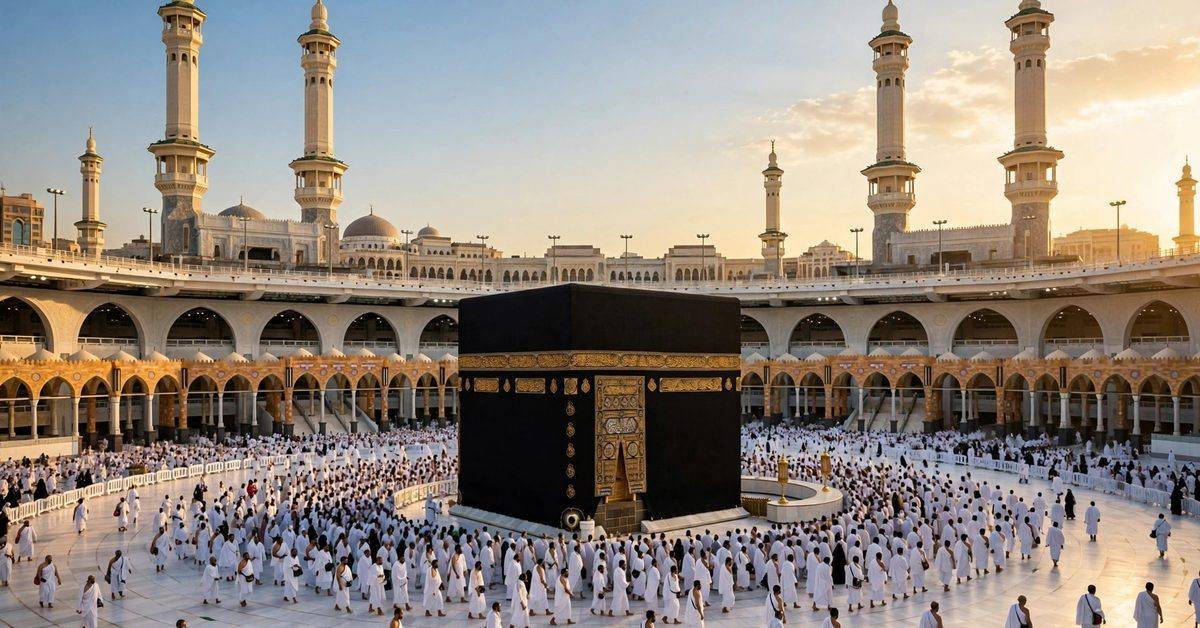
    Umrah is the lesser pilgrimage to Makkah — a few hours of worship, possible at any time of the year, that wipes away the sins between one Umrah and the next. Here is exactly how to perform it.

    What Is Umrah?

    Umrah is a pilgrimage to the Sacred House in Makkah. Unlike Hajj, which is fixed to specific days of Dhul-Hijjah, Umrah can be performed at any time of the year. It has four rites: Ihram, Tawaf, Sa’i, and shaving or trimming the hair. Allah commands it:

    وَأَتِمُّوا الْحَجَّ وَالْعُمْرَةَ لِلَّهِ

    “Wa atimmul-ḥajja wal-ʿumrata lillāh.”

    “And complete the Hajj and Umrah for Allah.” (Surah Al-Baqarah 2:196)

    Abu Hurairah (may Allah be pleased with him) reported that the Prophet ﷺ said:

    الْعُمْرَةُ إِلَى الْعُمْرَةِ كَفَّارَةٌ لِمَا بَيْنَهُمَا، وَالْحَجُّ الْمَبْرُورُ لَيْسَ لَهُ جَزَاءٌ إِلاَّ الْجَنَّةُ

    “Al-ʿumratu ilal-ʿumrati kaffāratun limā baynahumā, wal-ḥajjul-mabrūru laysa lahu jazāʾun illal-jannah.”

    “(The performance of) Umrah is an expiation for the sins committed (between it and the previous one). And the reward of Hajj Mabrur (the one accepted by Allah) is nothing except Paradise.” (Sahih al-Bukhari 1773; Sahih Muslim 1349)

    Before You Leave

    Learn the steps before you travel. Pack your Ihram garments (two plain white unstitched cloths for men; women wear their normal modest clothing), comfortable sandals, and unscented toiletries. Above all, make a sincere intention — Umrah is worship, not a holiday.

    Step 1: Enter Ihram and Recite the Talbiyah

    Before the Miqat — the boundary around Makkah — make ghusl, put on your Ihram, and pray two rak’ahs. Then make the intention for Umrah: “Labbayk Allahumma Umrah” (Here I am, O Allah, for Umrah). Ihram’s restrictions now apply: no perfume, no cutting hair or nails, and no stitched clothing for men. Then begin the Talbiyah, the call of the pilgrim:

    لَبَّيْكَ اللَّهُمَّ لَبَّيْكَ، لَبَّيْكَ لَا شَرِيكَ لَكَ لَبَّيْكَ، إِنَّ الْحَمْدَ وَالنِّعْمَةَ لَكَ وَالْمُلْكَ، لَا شَرِيكَ لَكَ

    “Labbayk Allāhumma labbayk, labbayka lā sharīka laka labbayk, innal-ḥamda wan-niʿmata laka wal-mulk, lā sharīka lak.”

    “Here I am, O Allah, here I am. Here I am, You have no partner, here I am. Verily all praise, grace and dominion belong to You. You have no partner.”

    Keep reciting it on the journey — men aloud, women quietly.

    Step 2: Tawaf — Seven Circuits Around the Kaaba

    In Masjid al-Haram, begin Tawaf at the Black Stone. Face it, raise your hands and say “Bismillah, Allahu Akbar” — touching or kissing it if you can reach it without pushing, or pointing towards it from a distance. Then walk anticlockwise around the Kaaba, keeping it on your left, for seven circuits — briskly in the first three, for men.

    The Prophet ﷺ said: “Tawaf around the House is like prayer, except that you may speak during it. So whoever speaks during it, let him not speak of anything but what is good.” (Jamiʿ at-Tirmidhi 960 — graded sahih by al-Albani)

    No dua is fixed for Tawaf — recite Quran, make dua, and remember Allah as you walk. Between the Yemeni Corner and the Black Stone, recite this dua from the Quran:

    رَبَّنَا آتِنَا فِي الدُّنْيَا حَسَنَةً وَفِي الْآخِرَةِ حَسَنَةً وَقِنَا عَذَابَ النَّارِ

    “Rabbanā ātinā fid-dunyā ḥasanah, wa fil-ākhirati ḥasanah, wa qinā ʿadhāban-nār.”

    “Our Lord, give us in this world [that which is] good and in the Hereafter [that which is] good and protect us from the punishment of the Fire.” (Surah Al-Baqarah 2:201)

    After the seventh circuit, pray two rak’ahs behind Maqam Ibrahim if possible, then drink Zamzam and make dua.

    Step 3: Sa’i — Walking Between Safa and Marwah

    At Safa, begin Sa’i. Allah says:

    إِنَّ الصَّفَا وَالْمَرْوَةَ مِن شَعَائِرِ اللَّهِ

    “Innaṣ-ṣafā wal-marwata min shaʿāʾirillāh.”

    “Indeed, as-Safa and al-Marwah are among the symbols of Allah.” (Surah Al-Baqarah 2:158)

    On Safa, face the Kaaba, say “Allahu Akbar” three times, then make dua. Walk to Marwah — one length. Men jog lightly between the two green lights. Repeat for seven lengths, finishing at Marwah. No dua is fixed for Sa’i either — pour your heart out to Allah. Sa’i remembers Hajar’s search for water for her son Ismail, a reminder that Allah never abandons those who trust Him.

    Step 4: Shave or Trim Your Hair — Umrah Complete

    After Sa’i, men shave their heads (the more rewarding option) or trim their hair evenly. Women cut a fingertip’s length from the ends of their hair. With this, you exit Ihram — your Umrah is complete.

    3 Common Mistakes First-Timers Make

    1. Treating Tawaf like a race. Pushing to kiss the Black Stone harms others — pointing from a distance is enough.

    2. Reciting duas from a book without understanding. Your own heartfelt dua beats words you do not understand.

    3. Forgetting the intention at the Miqat. Entering Makkah without Ihram means a penalty, so intend before crossing the boundary.

    Do Tawaf at quieter times — late at night or after Fajr. Wear broken-in sandals, carry water, and agree on a meeting point with your group. Keep your duas written down. The rites take two to three hours, so rest between them — patience during Umrah is itself worship.

    A short journey with an enormous return — sins forgiven, duas answered, a heart renewed. May Allah accept it and invite you again and again.

    FAQs

    How long does Umrah take?

    About two to three hours, depending on crowds — most pilgrims spend several days in Makkah for extra worship.

    Can I perform Umrah at any time of the year?

    Yes, unlike Hajj, which is fixed to specific days of Dhul-Hijjah — avoid the Hajj days themselves.

    Do women need a mahram for Umrah?

    Rules depend on your country and current Saudi visa policy — check the latest requirements before booking.

    What is the difference between Hajj and Umrah?

    Hajj is obligatory once in a lifetime for those who can afford it, performed only in Dhul-Hijjah with extra rites at Mina, Arafat and Muzdalifah; Umrah is a shorter, voluntary pilgrimage any time of the year.

    Can children perform Umrah?

    Yes — the reward is recorded for them, and the parents also receive reward for taking them.

    If you would like a caring teacher to help you or your child read the Quran fluently with Tajweed, book a free trial class with Noor Academy Pakistan today.

  • The Six Articles of Faith (Iman) in Islam Explained

    The Six Articles of Faith (Iman) in Islam Explained

    What do Muslims actually believe? The answer fits in six points. The six articles of faith — known in Arabic as Arkan al-Iman — are the core beliefs that define a Muslim’s faith: belief in Allah, His angels, His books, His messengers, the Last Day, and divine decree. Everything else in Islam, from prayer to fasting to good character, is built on this foundation.

    What Are the Six Articles of Faith?

    The six articles come from one of the most famous hadiths in Islam, the Hadith of Jibril. The angel Jibril came to the Prophet Muhammad ﷺ in the form of a man and asked him, “Tell me about iman (faith).” The Prophet ﷺ replied:

    الْإِيمَانُ أَنْ تُؤْمِنَ بِاللَّهِ وَمَلَائِكَتِهِ وَكُتُبِهِ وَرُسُلِهِ وَالْيَوْمِ الْآخِرِ وَتُؤْمِنَ بِالْقَدَرِ خَيْرِهِ وَشَرِّهِ

    “Al-imanu an tu’mina billahi wa mala’ikatihi wa kutubihi wa rusulihi wal-yawmil-akhiri wa tu’mina bil-qadari khayrihi wa sharrih.”

    “Faith is to believe in Allah, His angels, His books, His messengers, the Last Day, and to believe in divine decree, both its good and its bad.” (Sahih Muslim 8)

    The Quran states the same foundation in a single verse:

    آمَنَ الرَّسُولُ بِمَا أُنزِلَ إِلَيْهِ مِن رَّبِّهِ وَالْمُؤْمِنُونَ ۚ كُلٌّ آمَنَ بِاللَّهِ وَمَلَائِكَتِهِ وَكُتُبِهِ وَرُسُلِهِ لَا نُفَرِّقُ بَيْنَ أَحَدٍ مِّن رُّسُلِهِ ۚ وَقَالُوا سَمِعْنَا وَأَطَعْنَا ۖ غُفْرَانَكَ رَبَّنَا وَإِلَيْكَ الْمَصِيرُ

    “Amanar-rasulu bima unzila ilayhi mir-rabbihi wal-mu’minun. Kullun amana billahi wa mala’ikatihi wa kutubihi wa rusulihi, la nufarriqu bayna ahadin mir-rusulih. Wa qalu sami’na wa ata’na, ghufranaka rabbana wa ilaykal-masir.”

    “The Messenger has believed in what was revealed to him from his Lord, and [so have] the believers. All of them have believed in Allah and His angels and His books and His messengers, [saying], ‘We make no distinction between any of His messengers.’ And they say, ‘We hear and we obey. [We seek] Your forgiveness, our Lord, and to You is the [final] destination.’” (Surah Al-Baqarah 2:285)

    Here is each article, explained simply.

    1. Belief in Allah

    This is the first and greatest article: Allah is One, with no partner, no equal and no son. He is the Creator and Sustainer of everything, and He alone deserves worship. Surah Al-Ikhlas sums it up in four short verses:

    قُلْ هُوَ اللَّهُ أَحَدٌ ۝ اللَّهُ الصَّمَدُ ۝ لَمْ يَلِدْ وَلَمْ يُولَدْ ۝ وَلَمْ يَكُن لَّهُ كُفُوًا أَحَدٌ

    “Qul huwallahu ahad. Allahus-samad. Lam yalid wa lam yulad. Wa lam yakul-lahu kufuwan ahad.”

    “Say: He is Allah, the One. Allah, the Eternal Refuge. He neither begets nor is born, nor is there to Him any equivalent.” (Surah Al-Ikhlas 112:1–4)

    2. Belief in the Angels

    Angels are honourable servants of Allah, created from light, who never disobey Him and carry out His commands exactly. The Prophet ﷺ said: “The angels were created from light.” (Sahih Muslim 2996)

    Among them are Jibril, who brought revelation to the prophets; Mika’il, entrusted with rain and provision; and the angels who record our deeds. We cannot see angels, but believing in them reminds us that we are never truly alone — our actions are witnessed, and help from Allah can arrive in ways we do not see.

    3. Belief in the Revealed Books

    Allah sent guidance to humanity through books revealed to His messengers: the Torah to Musa, the Zabur (Psalms) to Dawud, the Injil (Gospel) to ‘Isa, and finally the Quran to Muhammad ﷺ. Muslims believe in all of them as originally revealed, and believe the Quran is the final revelation, preserved word for word, for all people until the Last Day.

    Practically, this article is why the Quran sits at the centre of a Muslim’s life: it is guidance itself, to be read, understood and lived by.

    4. Belief in the Messengers

    Allah chose messengers from among people to teach humanity how to worship Him and live rightly. Muslims believe in all of them without distinction — Nuh, Ibrahim, Musa, ‘Isa, and Muhammad ﷺ, the final messenger — and love and respect every one of them. The Quran commands this even-handed belief: “We make no distinction between any of His messengers” (Surah Al-Baqarah 2:285).

    This article protects us from two mistakes: rejecting a true prophet, and raising any prophet above his station as a servant and messenger of Allah. Muhammad ﷺ is the seal of the prophets, and his Sunnah shows us how to put the Quran into practice.

    5. Belief in the Last Day

    A Muslim believes this life is not the end. After death comes resurrection, the reckoning, and then Paradise or Hellfire, by Allah’s perfect justice and mercy. Every deed, large or small, will be weighed.

    This belief changes how we live today. It gives patience in hardship — injustice here is not the final word — and urgency to good deeds, because the time to act is now. It also gives hope: no sincere repentance is ever wasted, and no good deed, even a smile, goes unrecorded.

    6. Belief in Divine Decree (Qadar)

    The final article is belief that everything happens by Allah’s knowledge, will and wisdom — the good and the difficult alike. Allah says:

    إِنَّا كُلَّ شَيْءٍ خَلَقْنَاهُ بِقَدَرٍ

    “Inna kulla shay’in khalaqnahu bi-qadar.”

    “Indeed, all things We created with predestination.” (Surah Al-Qamar 54:49)

    Qadar does not mean sitting back and doing nothing. We still choose, strive and plan — and we are accountable for our choices. It means that after we have done our best, we trust the outcome to Allah. This trust is what turns anxiety into calm: you do your part, and you leave the result to the One who knows what you do not.

    How the Six Articles of Faith Shape Daily Life

    These six beliefs are not abstract theology; they are a daily compass. Belief in Allah anchors worship. Belief in the angels reminds you that your deeds matter even when no one is watching. Belief in the books and messengers gives you a trustworthy guide instead of guesswork. Belief in the Last Day keeps your priorities straight. Belief in Qadar gives you peace after effort.

    A simple way to teach them at home: one article each evening with your children, with one example from daily life for each. By the end of the week, the whole family will know the foundation of the faith by heart.

    Frequently Asked Questions

    What is the difference between the six articles of faith and the five pillars of Islam?

    The six articles of faith (iman) are what a Muslim believes in the heart; the five pillars — Shahadah, salah, zakat, fasting in Ramadan and Hajj — are the actions built on that belief. Belief without action is incomplete, and action without belief is empty.

    Do Muslims have to believe in all the prophets, or only Muhammad ﷺ?

    All of them. Belief in every messenger Allah sent, without distinction, is itself one of the six articles (Surah Al-Baqarah 2:285).

    Does belief in Qadar mean everything is already decided, so effort does not matter?

    No. Allah knows and wills all things, but human beings still choose and act, and are accountable for their choices. Plan, work hard, then trust the outcome to Him.

    Why is belief in angels included when we cannot see them?

    Because faith includes the unseen. The Quran describes angels as real servants of Allah who carry out His commands, and the Hadith of Jibril lists them among the six articles.

    How can I teach the six articles of faith to my children?

    One article a day, in plain words, with a daily-life example — Allah hears our dua; angels record our good deeds; the Quran is our guidebook; the prophets show us the way; the Last Day means our deeds count forever; Qadar means we try our best and trust Allah with the result.

    Start Today

    If you are new to Islam, or teaching it to your family, start here: learn these six articles by heart, and then learn what each one asks of you in daily life. Faith grows the same way a tree grows — from roots, quietly, day by day.

    If you would like your children to learn the foundations of faith alongside the Quran itself, book a free trial class with Noor Academy Pakistan — our qualified teachers teach Quran, Tajweed and Islamic basics online, at a time that suits your family, In sha Allah.

  • Dua for Anxiety: 5 Powerful Duas to Calm Your Heart

    Dua for Anxiety: 5 Powerful Duas to Calm Your Heart

    Anxiety is not a sign of weak faith. It is a human feeling — and Islam gives us words for it. Here are five authentic duas for anxiety from the Quran and Sunnah, with Arabic text, transliteration and translation, plus a simple daily routine to build them into your life.

    Why the Heart Feels Restless

    Worry about money, health, children, work or the future can sit in the chest all day and follow us into the night. Allah describes the cure in one verse:

    الَّذِينَ آمَنُوا وَتَطْمَئِنُّ قُلُوبُهُم بِذِكْرِ اللَّهِ ۗ أَلَا بِذِكْرِ اللَّهِ تَطْمَئِنُّ الْقُلُوبُ

    “Alladhīna āmanū wa taṭma’innu qulūbuhum bi-dhikrillāh. Alā bi-dhikrillāhi taṭma’innul-qulūb.”

    “Those who have believed and whose hearts are assured by the remembrance of Allah. Unquestionably, by the remembrance of Allah hearts are assured.” (Surah Ar-Ra’d 13:28)

    Dhikr — Quran recitation, prayer and dua — is that remembrance in practice.

    1. The Main Dua for Anxiety

    This is the dua the Prophet ﷺ taught to a companion weighed down by worries and debts. Abu Sa’id al-Khudri (may Allah be pleased with him) narrated that the Prophet ﷺ found Abu Umamah sitting in the mosque outside prayer time. When Abu Umamah said, “Never-ending worries and debts, O Messenger of Allah,” the Prophet ﷺ taught him these words and told him to say them morning and evening. Abu Umamah later said: “Then I did that, and Allah removed my worries and settled my debts.”

    اللَّهُمَّ إِنِّي أَعُوذُ بِكَ مِنَ الْهَمِّ وَالْحَزَنِ، وَالْعَجْزِ وَالْكَسَلِ، وَالْبُخْلِ وَالْجُبْنِ، وَضَلَعِ الدَّيْنِ، وَغَلَبَةِ الرِّجَالِ

    “Allāhumma innī a’ūdhu bika minal-hammi wal-ḥazan, wal-‘ajzi wal-kasal, wal-bukhli wal-jubn, wa ḍala’id-dayn, wa ghalabatir-rijāl.”

    “O Allah, I seek refuge in You from anxiety and grief, from incapacity and laziness, from miserliness and cowardice, from the burden of debt and from being overpowered by others.” (Sunan Abi Dawud, Hadith 1555; also in Sahih al-Bukhari, Hadith 6363)

    It covers both the feeling and its causes: helplessness, debt and pressure from others. Say it morning and evening, slowly.

    2. The Dua for Times of Distress

    When anxiety spikes suddenly — bad news, a frightening moment, a problem with no clear answer — the Prophet ﷺ had a shorter dua for exactly that moment. Ibn Abbas (may Allah be pleased with him) narrated that the Prophet ﷺ used to invoke Allah at times of distress, saying:

    لَا إِلَهَ إِلَّا اللَّهُ الْعَظِيمُ الْحَلِيمُ، لَا إِلَهَ إِلَّا اللَّهُ رَبُّ السَّمَوَاتِ وَالْأَرْضِ، وَرَبُّ الْعَرْشِ الْعَظِيمِ

    “Lā ilāha illallāhul-‘Aẓīmul-Ḥalīm, lā ilāha illallāhu Rabbus-samāwāti wal-arḍ, wa Rabbul-‘Arshil-‘Aẓīm.”

    “There is no deity worthy of worship except Allah, the Most Great, the Most Forbearing. There is no deity worthy of worship except Allah, the Lord of the heavens and the earth, and the Lord of the Magnificent Throne.” (Sahih al-Bukhari, Hadith 6345)

    This dua contains no request — only praise. In panic, it turns the heart from the size of the problem to the greatness of Allah.

    3. The Dua of Yunus (Peace Be Upon Him)

    Prophet Yunus (peace be upon him) called out to Allah from inside the belly of the whale, in darkness upon darkness. His words are the shortest dua in this post:

    لَا إِلَهَ إِلَّا أَنْتَ سُبْحَانَكَ إِنِّي كُنْتُ مِنَ الظَّالِمِينَ

    “Lā ilāha illā anta subḥānaka innī kuntu minaẓ-ẓālimīn.”

    “There is no deity except You; exalted are You. Indeed, I have been of the wrongdoers.” (Surah Al-Anbiya 21:87)

    He affirmed Allah’s oneness and owned his own mistake — the dua for anxiety mixed with guilt or regret.

    4. “Allah Is Sufficient for Us”

    After a battle, when the believers were told that a great army was gathering against them, their answer was not panic but trust:

    حَسْبُنَا اللَّهُ وَنِعْمَ الْوَكِيلُ

    “Ḥasbunallāhu wa ni’mal-Wakīl.”

    “Allah is sufficient for us, and He is the best Disposer of affairs.” (Surah Aal-e-Imran 3:173)

    This is the dua for anxiety caused by other people. It does not mean stopping action — take the step you can, then hand the outcome to Allah.

    5. Make Your Own Dua, in Your Own Words

    After the duas above, speak to Allah in your own language about exactly what worries you. After prayer, sit for a minute and say, “O Allah, You know what worries me. Make it easy, guide me to the right step, and give my heart peace.” Then take the next practical step, and trust Allah with the rest.

    A Simple Daily Routine for Anxiety

    1. Morning: After Fajr, recite the main dua for anxiety (Dua 1) once, slowly.
    2. During the day: When worry spikes, repeat the dua of distress (Dua 2) or “Hasbunallahu wa ni’mal Wakeel” (Dua 4) until your breathing settles.
    3. Evening: Before sleeping, recite Dua 1 again, then speak your own dua in your own words.
    4. Every day: Recite even a small portion of the Quran with understanding — Quran recitation is the highest form of remembrance.

    Start small. One dua, morning and evening, done consistently, is better than ten duas memorized and forgotten.

    When Anxiety Does Not Go Away

    Duas help, but they are not the whole answer. Sleep, regular prayer, talking to a trusted person, and less endless scrolling all help. If anxiety is constant or severe, or stops you sleeping or working normally, speak to a doctor or qualified counsellor too. That is taking the means Allah provided — keep making dua alongside it, not instead of it.

    Frequently Asked Questions

    Which dua is best for anxiety?

    “Allahumma inni a’udhu bika minal-hammi wal-hazan…” (Sunan Abi Dawud 1555) is the most direct dua for anxiety. Pair it with the dua of distress (Sahih al-Bukhari 6345) for sudden worry.

    How many times should I recite the dua for anxiety?

    Say the main dua morning and evening. The others have no fixed number — recite them slowly, with understanding.

    Can I make dua for anxiety in English or Urdu?

    Yes. Memorized duas are in Arabic, but your own dua can be in any language.

    Does anxiety mean my faith is weak?

    No. Prophets and companions felt grief and worry too. Turning to Allah when it comes is itself an act of faith.

    Can children recite these duas?

    Yes. Teach the short ones first — “Hasbunallahu wa ni’mal Wakeel” and the dua of Yunus — with their meanings.

    Should I stop other treatment if I make these duas?

    No. Dua and practical help go together — continue any support you need.

    Start Tonight

    Memorize one dua from this post today, say it morning and evening, and let the remembrance of Allah give your heart rest, in sha Allah.

    Want your family to learn the Quran with understanding? Book a free trial class at Noor Academy Pakistan, online Quran academy — learn from certified tutors, one-on-one, from the comfort of your home.

  • 10 Benefits of Reciting the Quran Daily (With Proof)

    10 Benefits of Reciting the Quran Daily (With Proof)

    10 Benefits of Reciting the Quran Daily (With Proof)

    Reciting the Quran daily is one of the most rewarding habits a Muslim can build. These are ten authentic benefits of reciting the Quran daily, each backed by a verse of the Quran or a sahih hadith.

    1. The Quran Will Intercede for You on the Day of Judgment

    On that Day, the Quran itself will stand up and plead for its reciter:

    اقْرَءُوا الْقُرْآنَ فَإِنَّهُ يَأْتِي يَوْمَ الْقِيَامَةِ شَفِيعًا لِأَصْحَابِهِ

    “Iqra’ū al-Qur’ān fa-innahu ya’tī yawma al-qiyāmati shafī’an li-aṣḥābihi.”

    “Read the Quran, for it will come as an intercessor for its companions on the Day of Resurrection.” (Sahih Muslim, Hadith 804)

    Intercession is promised to the Quran’s daily companions.

    2. Every Letter Earns You Ten Rewards

    Few promises in our religion match this:

    مَنْ قَرَأَ حَرْفًا مِنْ كِتَابِ اللهِ فَلَهُ بِهِ حَسَنَةٌ، وَالْحَسَنَةُ بِعَشْرِ أَمْثَالِهَا، لَا أَقُولُ الم حَرْفٌ، وَلَكِنْ أَلِفٌ حَرْفٌ وَلَامٌ حَرْفٌ وَمِيمٌ حَرْفٌ

    “Man qara’a ḥarfan min kitāb Allāh fa lahu bihi ḥasanah, wal-ḥasanatu bi-‘ashri amthālihā. Lā aqūlu: Alif-Lām-Mīm ḥarf, wa lākin alif ḥarf, wa lām ḥarf, wa mīm ḥarf.”

    “Whoever reads a letter from the Book of Allah will have a good deed recorded for it, and each good deed is multiplied tenfold.” (Sunan al-Tirmidhi, Hadith 2910, graded hasan)

    Reading Surah Al-Fatihah alone earns over a thousand rewards in minutes.

    3. Tranquillity Descends Upon the Reciter

    The Prophet ﷺ promised this calm:

    مَا اجْتَمَعَ قَوْمٌ فِي بَيْتٍ مِنْ بُيُوتِ اللَّهِ يَتْلُونَ كِتَابَ اللَّهِ وَيَتَدَارَسُونَهُ بَيْنَهُمْ إِلَّا نَزَلَتْ عَلَيْهِمُ السَّكِينَةُ وَغَشِيَتْهُمُ الرَّحْمَةُ وَحَفَّتْهُمُ الْمَلَائِكَةُ وَذَكَرَهُمُ اللَّهُ فِيمَنْ عِنْدَهُ

    “Mā ijtama’a qawmun fī baytin min buyūt Allāh yatlūna kitāb Allāh wa yatadārasūnahu baynahum illā nazalat ‘alayhimu as-sakīnah wa ghashiyathumu ar-raḥmah wa ḥaffathumu al-malā’ikah wa dhakarahumu Allāhu fīman ‘indah.”

    “Any group that gathers in a house of Allah to recite the Book of Allah — tranquillity descends upon them, mercy covers them, the angels surround them, and Allah mentions them to those near Him.” (Sahih Muslim, Hadith 2699)

    4. Allah Remembers Those Who Remember Him

    Reciting the Quran is remembrance at its highest — and it is never unanswered:

    فَاذْكُرُونِي أَذْكُرْكُمْ وَاشْكُرُوا لِي وَلَا تَكْفُرُونِ

    “Fadhkurūnī adhkurkum wa-shkurū lī wa lā takfurūn.”

    “So remember Me; I will remember you. Be grateful to Me and do not deny Me.” (Surah Al-Baqarah 2:152)

    5. It Heals the Heart

    The Quran cures the illnesses of the heart — doubt, anxiety, grief:

    وَنُنَزِّلُ مِنَ الْقُرْآنِ مَا هُوَ شِفَاءٌ وَرَحْمَةٌ لِّلْمُؤْمِنِينَ

    “Wa nunazzilu mina al-Qur’ān mā huwa shifā’un wa raḥmatun lil-mu’minīn.”

    “And We send down of the Quran that which is healing and mercy for the believers.” (Surah Al-Isra 17:82)

    6. A Trade That Never Loses

    Allah calls the reciter’s habit the safest investment:

    إِنَّ الَّذِينَ يَتْلُونَ كِتَابَ اللَّهِ وَأَقَامُوا الصَّلَاةَ وَأَنفَقُوا مِمَّا رَزَقْنَاهُمْ سِرًّا وَعَلَانِيَةً يَرْجُونَ تِجَارَةً لَّن تَبُورَ

    “Inna alladhīna yatlūna kitāb Allāh wa aqāmū aṣ-ṣalāh wa anfaqū mimmā razaqnāhum sirran wa ‘alāniyatan yarjūna tijāratan lan tabūr.”

    “Indeed, those who recite the Book of Allah, establish prayer, and spend from what We provided them can expect a transaction that will never perish.” (Surah Al-Fatir 35:29)

    7. Your Rank in Paradise Rises With Every Verse

    Your recitation determines your rank in Paradise:

    يُقَالُ لِصَاحِبِ الْقُرْآنِ: اقْرَأْ وَارْتَقِ وَرَتِّلْ كَمَا كُنْتَ تُرَتِّلُ فِي الدُّنْيَا، فَإِنَّ مَنْزِلَتَكَ عِنْدَ آخِرِ آيَةٍ تَقْرَأُ بِهَا

    “Yuqālu li-ṣāḥib al-Qur’ān: iqra’ wa-rtaqi wa rattil kamā kunta turattilu fi ad-dunyā, fa-inna manzilataka ‘inda ākhiri āyatin taqra’u bihā.”

    “It will be said to the companion of the Quran: ‘Recite and ascend, reciting as you recited in the world, for your rank will be at the last verse you recite.’” (Sunan Abu Dawood, Hadith 1464; Sunan al-Tirmidhi, Hadith 2914)

    8. You Join the Best of People

    Daily recitation puts you among the best of believers:

    خَيْرُكُمْ مَنْ تَعَلَّمَ الْقُرْآنَ وَعَلَّمَهُ

    “Khayrukum man ta’allama al-Qur’āna wa ‘allamah.”

    “The best of you are those who learn the Quran and teach it.” (Sahih al-Bukhari, Hadith 5027)

    And if you find recitation difficult, you earn a double reward — no level of struggle is a reason to stop. (Sahih Muslim, Hadith 798)

    9. A Daily Companion That Guards You From Neglect

    The Messenger ﷺ will complain on Judgment Day about those who abandoned the Quran:

    وَقَالَ الرَّسُولُ يَا رَبِّ إِنَّ قَوْمِي اتَّخَذُوا هَٰذَا الْقُرْآنَ مَهْجُورًا

    “Wa qāla ar-rasūlu yā rabbi inna qawmī ittakhhadhū hādhā al-Qur’āna mahjūrā.”

    “And the Messenger will say: My Lord, my people took this Quran as something abandoned.” (Surah Al-Furqan 25:40)

    A page a day is your daily proof you did not abandon it.

    10. Small and Consistent Is the Most Beloved Deed

    You need a habit, not an hour:

    أَحَبُّ الأَعْمَالِ إِلَى اللَّهِ أَدْوَمُهَا وَإِنْ قَلَّ

    “Aḥabbul-a’māli ilā Allāhi adwamuhā wa in qalla.”

    “The most beloved deeds to Allah are those done most consistently, even if they are small.” (Sahih al-Bukhari, Hadith 646)

    5 Tips to Start Your Daily Recitation Habit

    1. Fix a time. Ten minutes after Fajr beats an hour you never find.
    2. Start small. One page a day completes the Quran in about 20 months.
    3. Use one mushaf. Familiar layouts strengthen fluency and memory.
    4. Read the meaning. One short translation note a day builds understanding.
    5. Get corrected. A qualified teacher fixes errors you cannot hear yourself. Join our online Quran classes to learn recitation with proper Tajweed.

    FAQs

    1. How much should I read daily to get these benefits?

    Even a few verses count. Start with half a page or one page daily and increase gradually.

    2. Is reading the translation enough?

    The promised rewards — letter-by-letter hasanat, intercession, and rank — are for reciting the Arabic text. Use a translation for understanding, with Arabic as the core habit.

    3. What is the best time to recite the Quran?

    After Fajr is the most blessed time:

    إِنَّ قُرْآنَ الْفَجْرِ كَانَ مَشْهُودًا

    “Inna qur’āna al-fajri kāna mashhūdā.”

    “Indeed, the recitation of dawn is ever witnessed.” (Surah Al-Isra 17:78)

    Any fixed time you can keep is excellent.

    4. I stumble and read slowly. Should I still recite daily?

    Yes — you earn a double reward for the struggle (Sahih Muslim, Hadith 798). Consider learning Tajweed with a teacher to improve steadily.

    5. How do I improve my recitation?

    Learn Tajweed from a qualified teacher and have them listen regularly. Our teachers at Noor Academy Pakistan teach it step by step in one-to-one online classes.


    Want to recite the Quran correctly? Book a free trial class with Noor Academy Pakistan — one-to-one online lessons with qualified teachers, In sha Allah.